

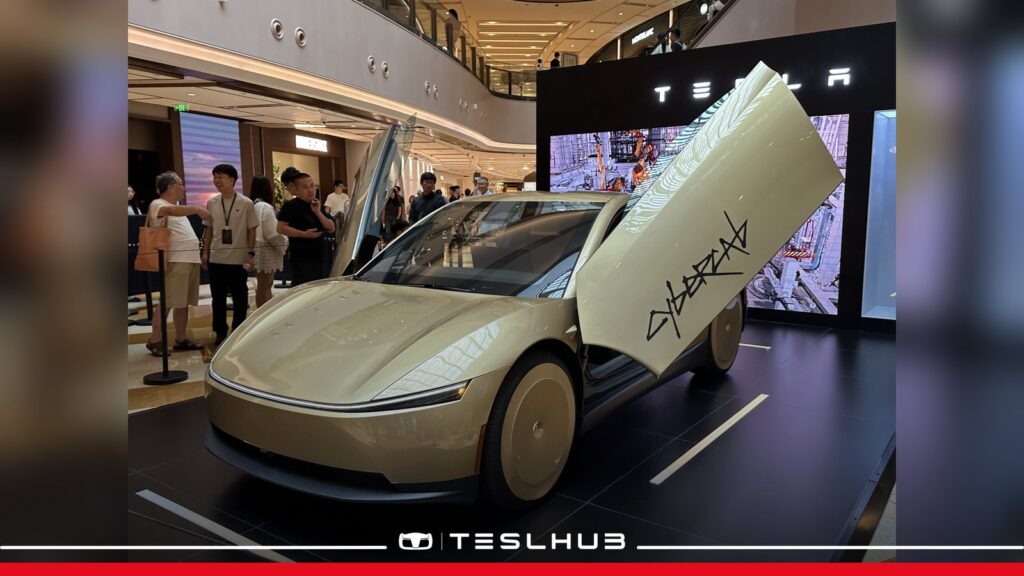
Tesla Cybercab targets at least 6.1 miles per kWh, according to the 2025 Impact Report. In units more familiar in Italy, that means around 9.8 km/kWh, equivalent to 10.2 kWh per 100 km. The decisive word is “projected”: Tesla describes a design target, rather than a European certified consumption figure or an independent road test.
Archive coverage published on 24 October 2026, with an editorial date of 15 July 2026. The text reconstructs information from the report available in July, without incorporating later announcements.
Tesla Cybercab: understanding 6.1 miles per kWh
The figure appears on page 72 of the official report, where Cybercab is labelled as projected. Converting miles to kilometres involves multiplying by 1.609344; expressing consumption per 100 km instead involves dividing 100 by the kilometres travelled per kWh. These are two ways of describing the same energy target.
A higher km/kWh figure indicates greater efficiency; a lower kWh/100 km figure indicates less energy needed for the same distance. Neither alone establishes vehicle range: usable battery capacity and measurement conditions would also be needed. The report should therefore not be turned into a promise of distance per charge.
An example helps avoid a common misunderstanding: using the equivalent 10.2 kWh/100 km in a calculation still means working with the report’s projection. It does not describe consumption measured during a Robotaxi ride. Climate control, route, speed and operating conditions would require specific verification before applying that figure to an actual service or a personal cost estimate.
Three technical details, with specific limits
On page 81, Tesla links the project to its 4680 cells, steer-by-wire and a 48-volt architecture. These are different elements: cell format concerns the battery, while the 48 volts describes the electrical architecture distributing energy to components. It does not state the traction battery’s voltage.
Likewise, the 4680 name alone does not establish Cybercab’s battery capacity, charging speed or lifespan. Those parameters require dedicated specifications. The document identifies design choices but does not support automatically transferring performance from another vehicle using the same cell format to the robotaxi.
The project also concerns the factory
Tesla also presents its unboxed manufacturing process, with assemblies produced in parallel, and lightweight panels made using reaction injection moulding, or RIM. In the report, these panels are linked to eliminating the traditional painting stage. The stated aim is to reduce manufacturing complexity and costs.
Road efficiency and manufacturing simplicity must nevertheless be kept separate. A factory process change does not, by itself, demonstrate consumption during a ride, just as an energy target does not establish the final passenger fare. They are parts of the company’s strategy to assess separately when comparable data become available.
What it means for Tesla followers in Italy
This information helps explain Cybercab as a vehicle designed for passenger transport and frequent use. It is not a purchase specification for the Italian market and does not establish when a service could operate in Europe. Technical features do not replace authorisations required in different markets.
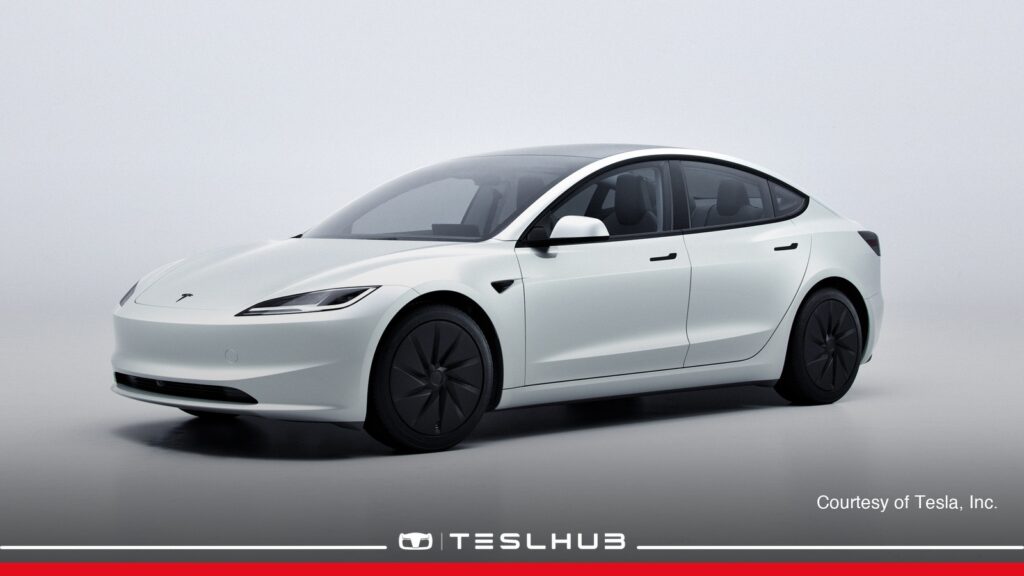
The most useful reading therefore retains the number alongside its qualification: 6.1 miles/kWh is the efficiency Tesla projects. Comparing it with real Model 3 or Model Y consumption will require consistent conditions, rather than comparing a design estimate with an owner’s daily journey.
For the document’s wider context, see our coverage of the 2025 Impact Report. Primary source: Tesla, 2025 Impact Report, pages 72 and 81. Cover: Tesla archive image from Teslhub’s library.
Follow news and analysis through Teslhub’s Telegram channel and WhatsApp channel. Join other enthusiasts in the Teslhub community.
Alessandro Marmaglio
The Teslhub team



Let’s discuss it
Experiences, questions and perspectives from the Teslhub community.
Please keep the discussion respectful. Members’ comments are moderated before publication.
Start the conversation. Leave the first comment.