
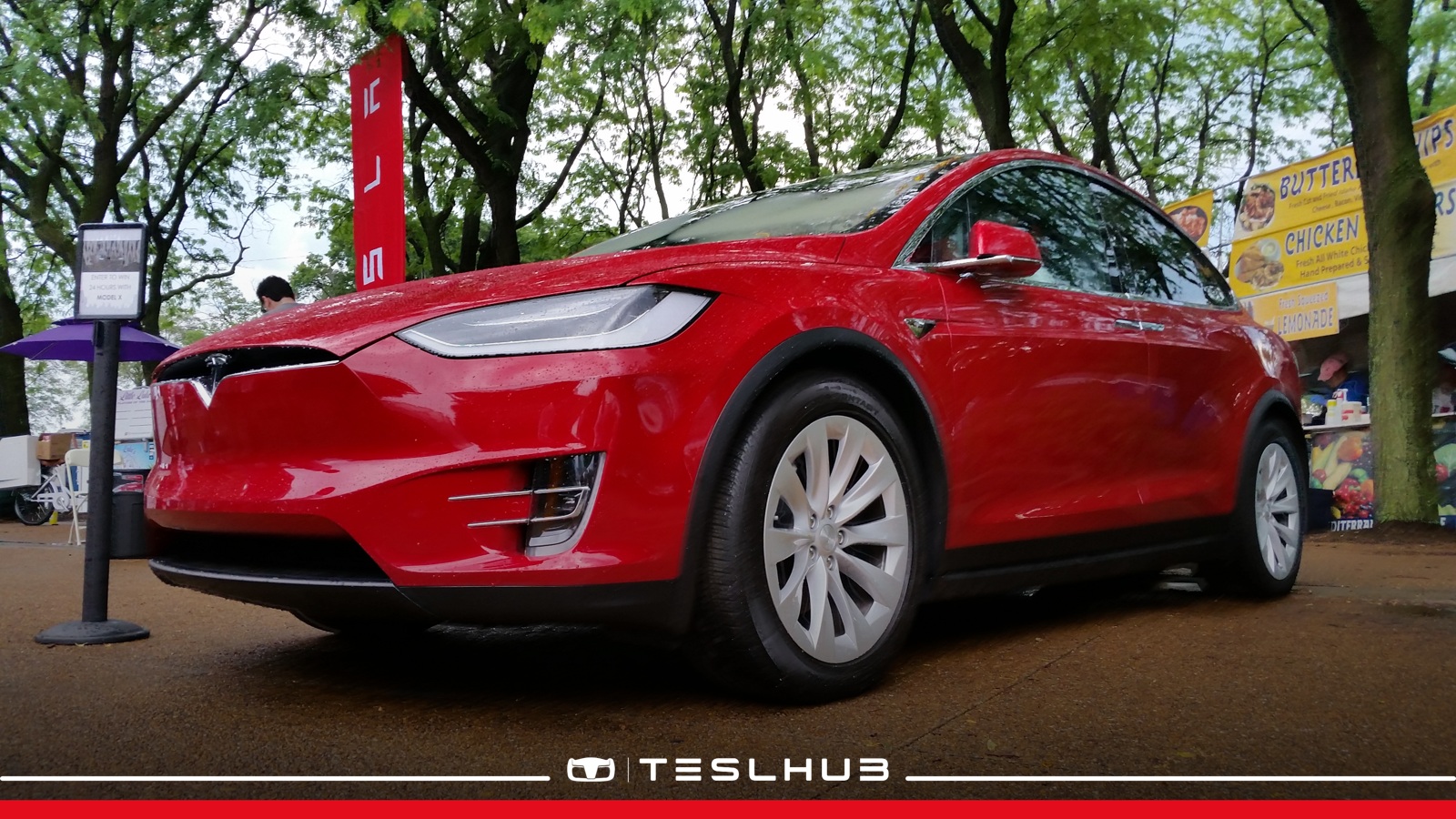
Model X: update of 3 August 2016, concerning the second quarter. This archive article was prepared in October 2026. Figures and plans describe that historical period. The cover is an archive photograph of the first generation, taken in Chicago in June 2017.
For the Model X, 2016 was the year when the presentation gave way to a less spectacular but decisive question: how many cars could actually be built and delivered? Its vertically opening doors had made the SUV recognisable, but increasing production required a long chain of operations, supplies and checks.
The second quarter showed tangible progress: 4,638 Model X deliveries, against the 2,400 reported for the first three months. This was almost twice as many, although from a modest base. The comparison describes an early phase of the model, not Tesla’s scale in later years.
Model X: just a few missing parts were enough
At the start of the year, Tesla had faced severe component shortages for the SUV, particularly in January and February. The company attributed the problem to overly ambitious design choices for the first version, insufficient validation of suppliers’ capabilities and still-limited internal capacity to take over production of those parts.
Only around half a dozen components were involved out of more than eight thousand unique parts. This detail illustrates the bottleneck: an almost complete car can still be undeliverable. Counting how many systems work is insufficient if something necessary to finish the car is missing.
In the last full week of March, output had reached 750 Model X cars. However, that weekly figure was not the quarter’s average, and many vehicles built at the end of the period had not yet reached their owners.
4,638 SUVs in the quarter, with an updated count
The consolidated second-quarter figure included 14,402 total Tesla deliveries: 9,764 Model S and 4,638 Model X. These were slightly higher than the initial July figures, when 4,625 Model X cars had been reported.
The difference does not describe a new quarter of sales; it is an update to the same period. Keeping both dates helps explain why contemporary articles may contain slightly different figures without referring to separate events.
The factory and the final journey to the customer
Between April and June, Tesla produced 18,345 vehicles in total, around 18% more than the previous quarter. This covers the entire range then in production, not Model X alone. By the end of the period, the overall rate was close to two thousand vehicles a week.
Almost half of quarterly production was concentrated in the final four weeks. At the end of June, 5,150 ordered vehicles were also still in transit to customers, again across the models.
These stages should not be conflated: leaving the production line and reaching the owner happen at different times. Distance and transport can move a delivery into the following quarter without automatically making that vehicle a car without a buyer.
Growth in its historical context
Plans for the second half remained future targets. The observable result was progress from the difficult early months, alongside the need to make the journey from factory to customer more consistent. Volumes alone did not describe profits or margins.
The Model X story also includes this stage: an unusual design must become a repeatable product that can be built consistently. In 2016, this was the practical test after the debut, and it remains a useful way to understand any new car launch.
Sources: Tesla’s update of 3 August 2016; Tesla’s first-quarter deliveries, 4 April 2016; Tesla’s initial second-quarter count, 3 July 2016.
Archive cover photograph: Michel Curi, first-generation Model X in Chicago, 17 June 2017, CC BY 2.0. It does not depict the 2016 production line. Adaptations: resizing and overlaying the complete original Teslhub PNG. No endorsement by the author is implied.



Let’s discuss it
Experiences, questions and perspectives from the Teslhub community.
Please keep the discussion respectful. Members’ comments are moderated before publication.
Start the conversation. Leave the first comment.