
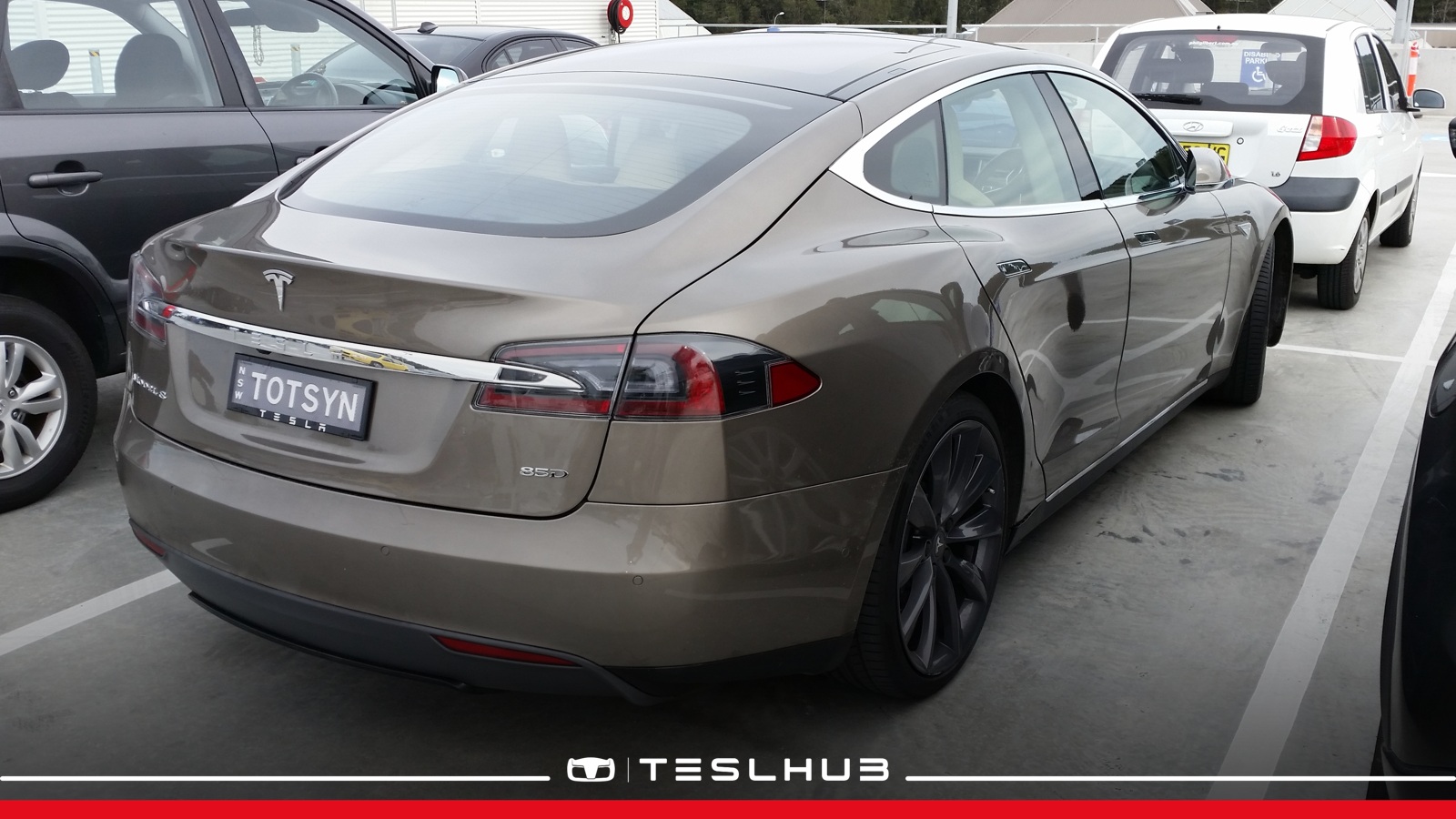
October 2014: Model S evolves with Dual Motor all-wheel drive and hardware intended for the first Autopilot functions. This archive article was prepared in October 2026, including the report of 5 November 2014 and a note on software developments in 2015.
One motor at the front and one at the rear: in autumn 2014, the Model S took a step that would leave a lasting mark on Tesla’s range. Dual Motor added all-wheel drive to the electric saloon, using two units to manage torque across the two axles.
Hardware for the first Autopilot functions arrived around the same time. The two announcements belonged to the same phase of development but concerned different systems: one propelled the car, while the other prepared the way for new forms of driver assistance. Confusing them loses an important part of the history.
Model S and torque controlled across two axles
The Dual Motor powertrain used two electric motors with digital, independent control of torque at the front and rear wheels. This differed from a car with a single combustion engine distributing power to both axles through a mechanical transmission.
The significance went beyond acceleration. Managing the two motors formed part of the work on efficiency, range and traction control. These were system-development goals; they do not justify promising an identical benefit in every condition or describing all-wheel drive as absolute protection against driving errors.
Autopilot in 2014 was not yet the system of 2015
Equipped cars used first-generation assistance hardware: a forward-facing camera, radar and ultrasonic sensors. The components’ presence was the starting point. Functions were then progressively introduced through software updates.
In 2015, version 6.1 enabled features such as adaptive cruise control, forward collision warning and automatic high beams. Automatic emergency braking and blind spot monitoring followed in March. In October 2015, version 7.0 brought Autopilot with assisted speed control and lane keeping through Autosteer, alongside assisted lane changes and Autopark.
This sequence distinguishes factory-installed hardware from feature availability. It is incorrect to describe the 2014 hardware announcement as though all those capabilities were already active that day. Autopilot also remained Level 2 assistance: the driver retained responsibility for controlling the car.
New features added complexity
The change also affected Fremont. Introducing Dual Motor and Autopilot hardware came during a period of production expansion and line updates. In November 2014, Tesla linked launch complexity to constraints on the production ramp and listed simplifying options and powertrain combinations among its planned actions.
A presentation and full-scale production were therefore separate stages. Customer interest in a new configuration did not remove the work needed to build and deliver it. This is another reason the Dual Motor debut is interesting: it shows how technical evolution becomes an industrial challenge.
Read today, that period contains two paths that would become central to Tesla: greater control through electric motors and functions evolving over time through software. The 2014 Model S brought them together in one car while keeping propulsion clearly distinct from driver assistance.
Sources and credits
- Tesla’s third-quarter 2014 letter, 5 November.
- Tesla’s 2015 annual report, Dual Motor technology and Autopilot hardware.
- HLDI, Tesla Model S driver assistance technologies, September 2017, feature chronology.
Cover: Jeremy from Sydney / Wikimedia Commons, CC BY 2.0, 24 July 2016. 2015 Model S 85D, an archive photograph taken after the 2014 launch. Cropped and overlaid with the complete original Teslhub PNG. The photograph does not imply editorial endorsement by the author.



Let’s discuss it
Experiences, questions and perspectives from the Teslhub community.
Please keep the discussion respectful. Members’ comments are moderated before publication.
Start the conversation. Leave the first comment.