
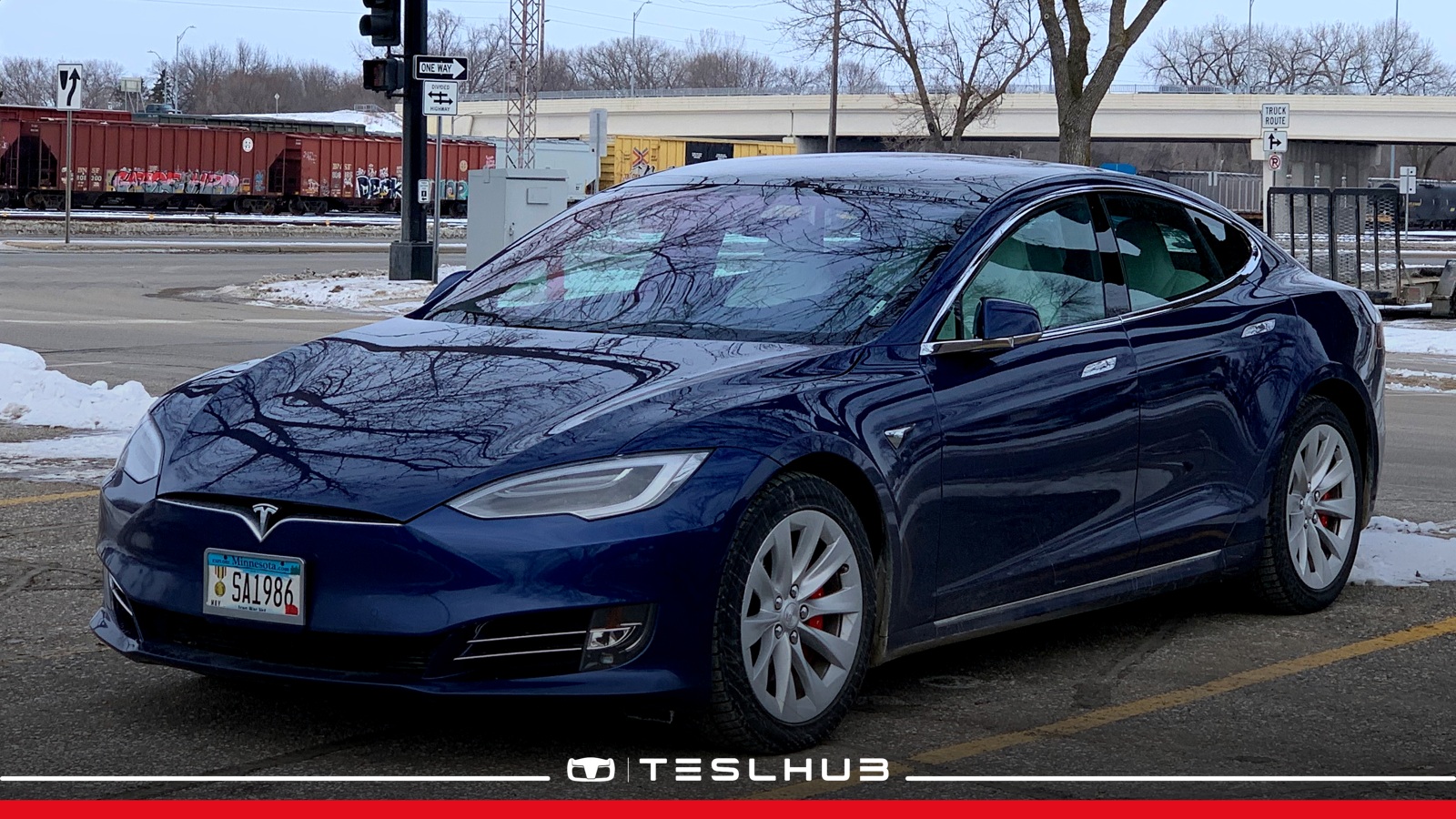
Historical news from 15 June 2020, North America. This archive article was prepared in October 2026. Figures and configurations belong to the announcement of that time. The cover shows the 2019 Model S 100D used as the comparison reference, not the Long Range Plus.
The 400-mile threshold had an immediate meaning: extending the distance associated with a full charge. In June 2020, the Model S Long Range Plus reached an official EPA range of 402 miles, or around 647 kilometres. The North American result primarily illustrated work on the saloon’s efficiency.
The number deserves to be preserved alongside its context. Converting miles to kilometres makes it more familiar to an Italian reader, but does not turn it into a European WLTP figure or a guaranteed distance on an Italian motorway.
Model S Long Range Plus: many changes, one result
The changes concerned weight, wheels, drivetrain and energy recovery. Seat manufacturing was standardised, while lighter materials were used in the battery pack and drive units. Aerodynamic Tempest wheels, paired with low-rolling-resistance tyres, helped reduce the energy needed to move the car.
In the rear induction drive unit, an electric oil pump replaced the mechanical one, allowing lubrication to be managed independently of vehicle speed. The front gearbox also received refinements. HOLD mode extended regeneration’s contribution at low speeds, integrating it with conventional brakes when stopping.
These changes had already entered Long Range Plus production in the first part of 2020. June’s announcement made the new range figure official; it did not promise to turn any earlier Model S into the same configuration through a software update.
The near-20% increase had a specific reference
The announced comparison was with a 2019 Model S 100D using the same battery pack design. The stated increase was close to 20%. It was therefore not a 20% improvement over every saloon version or every range figure in earlier price lists.
This distinction remains useful when reading an archive today. Model S covers different configurations, while Long Range Plus identifies a specific stage. Removing the version name from the comparison loses part of the information needed to understand the result.
647 converted kilometres remain an EPA figure
EPA range comes from laboratory tests and procedures for processing the results. The combined value brings together city and highway distances adjusted under the prescribed method. It is not simply the greatest distance observed in one favourable test.
In real use, cold weather, climate control and high speeds can significantly reduce range. Certification helps compare vehicles under a common procedure, but cannot describe every journey, temperature or driving style. Even two routes of the same length do not necessarily require the same energy.
That is why the 402 miles should not be used as a promise for an Italian journey or applied to the 100D on the cover. That car represents the historical comparison model, not the 402-mile Long Range Plus.
Range also comes from reducing waste
The significance of this milestone lies in the combined changes. A wheel, a lighter component or better-managed lubrication may seem minor in isolation. In a car, however, energy passes through many systems before becoming distance travelled.
Revisiting June 2020 encourages a view beyond battery capacity alone. Understanding range progress also requires the starting version, measurement method and changes made to the vehicle. This is where a headline number becomes interesting technical news.
Sources: Tesla’s announcement of 15 June 2020; U.S. Department of Energy, model year 2020 vehicles; EPA, range-testing methodology; EPA, range guidance in the January 2021 archive.
Archive cover photograph: Greg Gjerdingen, 2019 Model S 100D, photographed on 27 January 2021, CC BY 2.0. It is the comparison version cited in the announcement, not a Long Range Plus. Adaptation: cropping and overlaying the complete original Teslhub PNG. No endorsement by the photographer is implied.



Let’s discuss it
Experiences, questions and perspectives from the Teslhub community.
Please keep the discussion respectful. Members’ comments are moderated before publication.
Start the conversation. Leave the first comment.