
News from 18 April 2024, concerning US recall campaign 24V-276. This archive article was prepared in October 2026 and reconstructs the recall at that time, not the current status of an individual vehicle.
In the Cybertruck’s first months on sale, a component much less conspicuous than its steel body required attention: the accelerator pedal pad. In April 2024, Tesla began a US recall to prevent the pad from moving and obstructing the pedal’s return.
The episode belongs in the pickup’s history because it concerns the transition from a new design to managing it in service. Understanding it requires three distinctions: the identified defect, the affected vehicle population and the proposed remedy. Mixing them can easily produce alarming headlines or overly reassuring conclusions.
Cybertruck: 3,878 vehicles in the US campaign
The manufacturer’s report was submitted on 17 April 2024, with acknowledgement from the US authority the following day. Campaign 24V-276 covered 3,878 model year 2024 Cybertrucks produced from 13 November 2023 to 4 April 2024. Tesla’s internal reference was SB-24-33-003.
That number describes the population potentially affected by the recall, not a count of crashes or pedals that had actually become stuck. The production period also has a specific meaning: it does not imply that every Cybertruck built at any time automatically shares the same condition.
A pedal pad that could move
Under high force, the accelerator pad could become dislodged from its intended position and trapped in the interior trim above the pedal. This could cause unintended acceleration, increasing collision risk. The identified cause included the unapproved introduction of a lubricant, a soap used to aid assembly, whose residue reduced the pad’s retention.
The technical account stated that pressing the brake cut drive torque even when both pedals were pressed. However, that behaviour did not remove the defect requiring correction: an essential control should work properly without requiring the driver to compensate for a mechanical fault.
A physical repair, not a downloadable update
The remedy involved repairing or replacing the accelerator assembly at no charge to the customer. The service bulletin described securing the pad with a rivet or replacing the assembly, depending on the applicable procedure. This was work on a component, not a function enabled through the display.
This distinction is useful even for those who know Tesla mainly through over-the-air updates. Software can change many vehicle functions, but securing a pedal pad required a physical solution. The recall was not an invitation to modify the accelerator assembly yourself.
The date remains part of the story
This account concerns the 2024 action. It cannot establish whether a particular vehicle still has an outstanding repair or has already been corrected. That requires the vehicle identifier and official Tesla or NHTSA channels; an exterior photograph or the year shown in an advertisement is insufficient.
For us, preserving these episodes also makes the archive more useful: alongside launches, it records problems and technical responses. When reading recall news, which information do you look for first: the affected vehicles, the defect or the proposed solution?
Sources: NHTSA, report 24V-276 of 17 April 2024; NHTSA’s recall acknowledgement of 18 April 2024; Tesla, service bulletin SB-24-33-003.
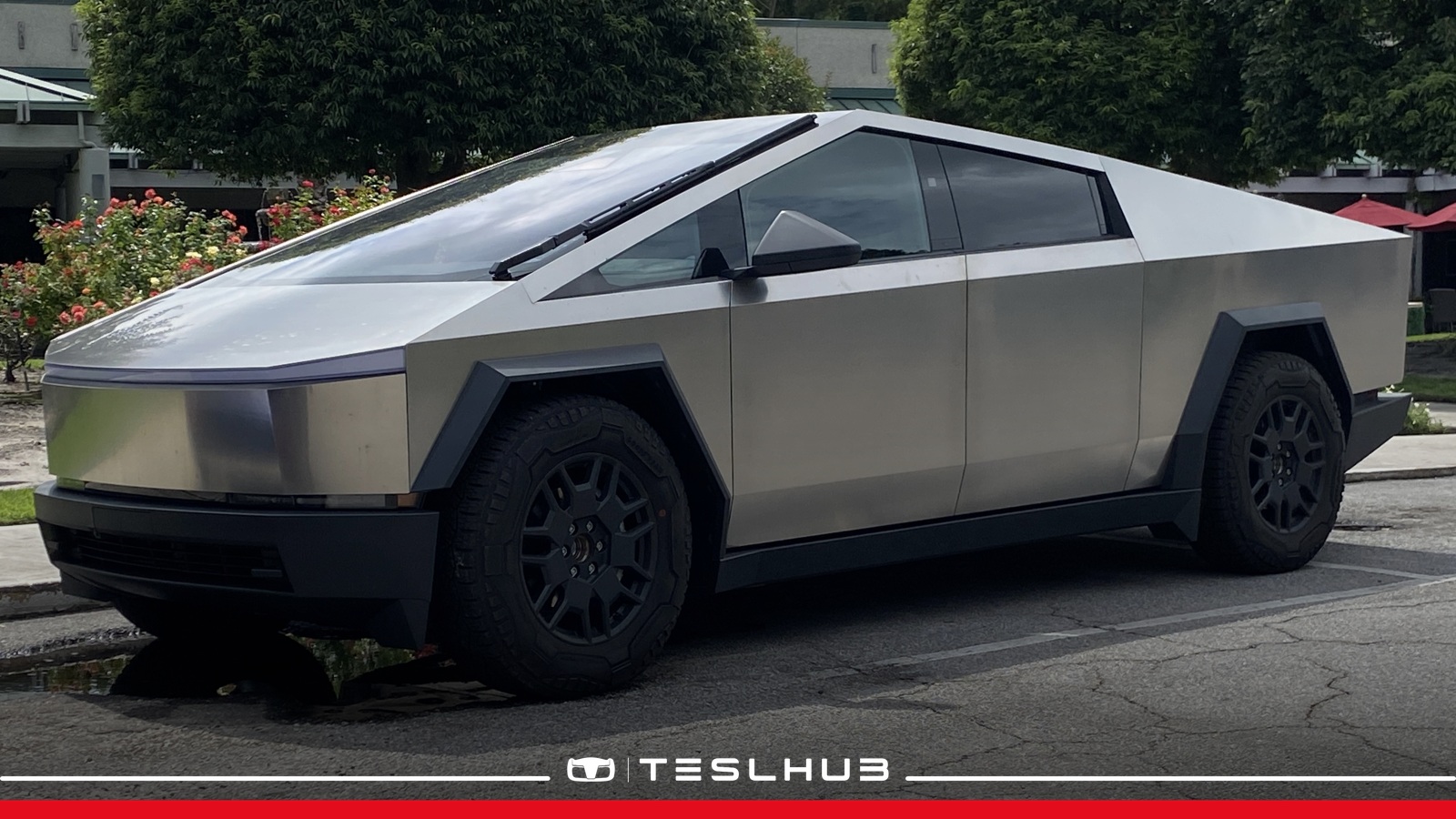
Cover: 2024 Cybertruck, an archive photograph taken on 27 July 2024 by Cutlass, Wikimedia Commons, CC0 1.0. Cropped and overlaid with the original Teslhub PNG. The photograph does not identify a recalled vehicle or show the defective component.




Let’s discuss it
Experiences, questions and perspectives from the Teslhub community.
Please keep the discussion respectful. Members’ comments are moderated before publication.
Start the conversation. Leave the first comment.