
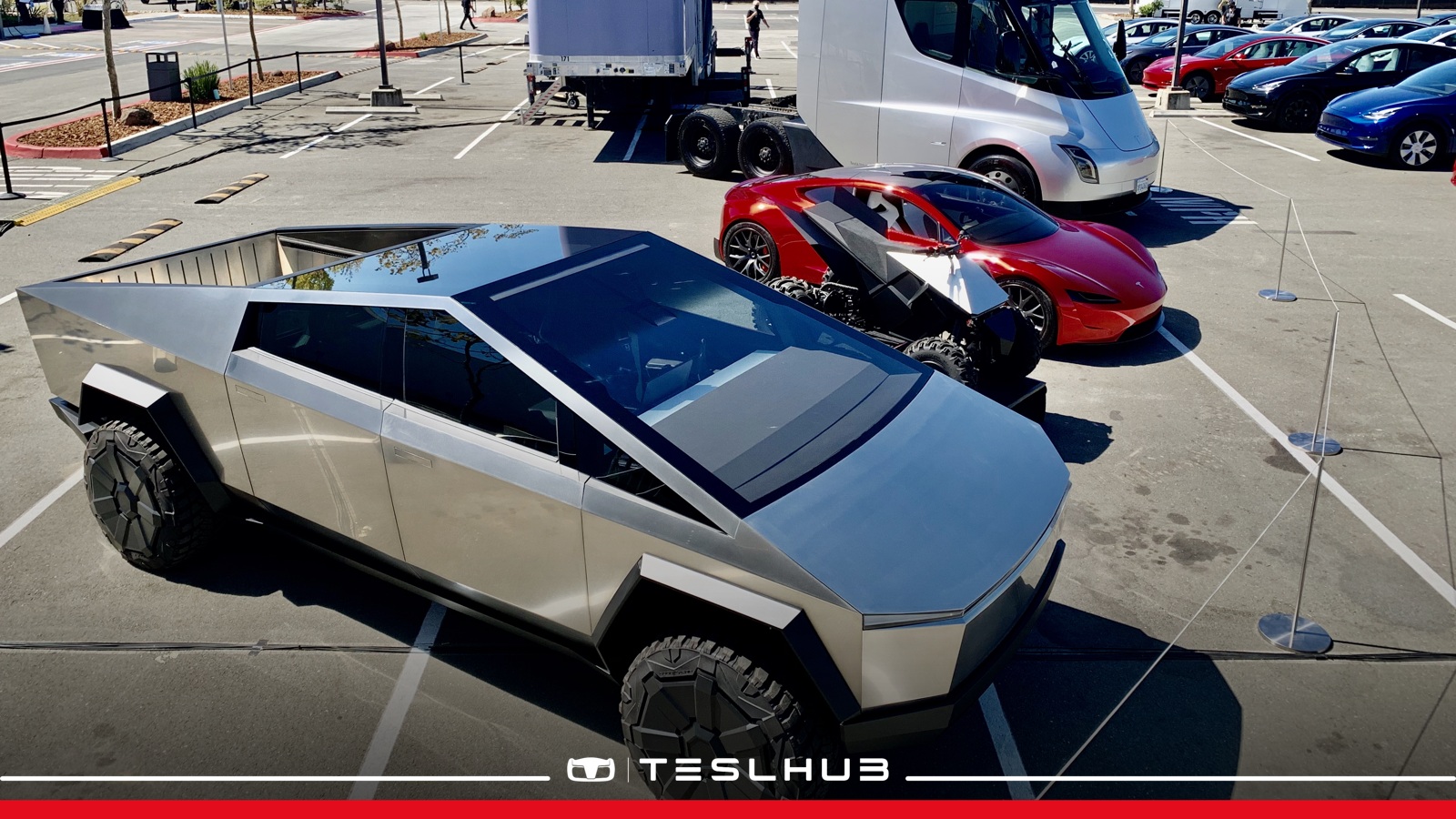
Cybertruck: unveiled on 21 November 2019, California. This archive article was prepared in October 2026. It describes the prototype and the targets presented then, not a configuration available to buy today. The cover is an archive photograph from September 2020.
The Cybertruck did not arrive as a raised saloon. At the Hawthorne presentation, Tesla showed a pickup with flat surfaces, a wedge-shaped silhouette and a load bed integrated into the body’s profile. One look made clear that the company was attempting something different from its cars.
The date is local to California: it was already 22 November in Italy. Revisiting that debut means returning to a project still to be industrialised, when the Cybertruck name primarily represented a proposal and its ambitions.
Cybertruck: steel becomes part of its identity
The design called for thick, cold-rolled stainless steel and particularly resistant glass. The stated aim was to meet the durability needs of a work vehicle while drawing on battery expertise.
The material was therefore more than an aesthetic finish. It was presented as part of the design logic, with the outer body and its resistance central to the discussion. Large geometric surfaces made that choice immediately recognisable.
This is what distinguished the debut from a simple styling variation. Tesla was not merely showing what its pickup might look like; it was explaining the character it wanted the vehicle to have.
The glass and the limits of stage demonstrations
During the event, Franz von Holzhausen struck the side windows with a metal ball. Both the front and rear windows cracked. The scene became one of the presentation’s most memorable moments.
That demonstration was not a standardised crash test. It cannot establish a road safety rating for the prototype or turn claims of resistance into a universal guarantee. Part of its historical interest lies in making visible the distance between a promotional message and a repeatable test conducted to a protocol.
A pickup as a tool, beyond its shape
The stage also illustrated the intended use. Adjustable suspension and loading an ATV into the bed linked the vehicle’s unusual appearance to practical activities. These were demonstrations of the design presented that evening, not final specifications for every later version.
The interesting point was the meeting of two needs: carrying people and equipment while bringing Tesla’s electric expertise into the pickup world. To follow the model’s development, visit our Cybertruck section.
Unveiling a prototype is not the same as delivering a vehicle
At the end of 2019, Cybertruck was still a future product. The challenges of introducing a new model and ramping up its production lay ahead. The debut set a direction; it did not certify that a factory was already ready to build it at scale.
This is the useful perspective for keeping the news in the archive. November 2019 marks the moment Tesla publicly presented its interpretation of an electric pickup. Industrialisation, commercial versions and deliveries belong to later stages, each with its own dates and conditions.
Sources: Tesla’s official Cybertruck video, published on 23 November 2019; Tesla’s 2019 annual report; Rev’s transcript of the original 21 November presentation.
Archive cover photograph: Steve Jurvetson, Cybertruck prototype at Tesla’s presentation on 22 September 2020, CC BY 2.0. This is not a photograph of the 2019 evening or the production vehicle. Adaptations: cropping and overlaying the complete original Teslhub PNG. No endorsement by the author is implied.



Let’s discuss it
Experiences, questions and perspectives from the Teslhub community.
Please keep the discussion respectful. Members’ comments are moderated before publication.
Start the conversation. Leave the first comment.