
News from 22 June 2012. This archive article was prepared in October 2026, looking at growth through the end of 2013.
Before becoming a familiar name among electric car enthusiasts, the Model S had to take the most tangible step: reaching customers. Tesla Model S deliveries began on 22 June 2012 in Fremont, California. After the Roadster, Tesla was taking on a saloon designed for a broader range of everyday uses.
That debut still matters because it marked a change in scale. A sports car can introduce a technology; a saloon must convince people seeking space, range and practicality as well as performance. Tesla was beginning a different industrial and commercial challenge, one car at a time.
Model S: the first deliveries on 22 June 2012
The first customers received their cars at an invitation-only event at Tesla’s factory. Deliveries began around a month ahead of the previously announced schedule. The company had already received more than 10,000 reservations worldwide: a sign of interest that still had to become production and deliveries.
This distinction is useful at any car launch. Reservations describe potential demand; delivered cars represent a product that has actually entered owners’ lives. On 22 June, that second chapter began, without removing the challenges of the growth to come.
A saloon designed around electric propulsion
The Model S was designed as an electric car, with its battery in the floor and luggage space at the front as well as the rear. For the 85 kWh version, the stated range under the EPA five-cycle test was 265 miles, or about 426 kilometres.
That figure belongs to the configuration and test method of its time. It is not a promise of range in every condition, nor a WLTP figure that can be directly compared with current specifications. Understanding the difference between certified range and real-world use remains essential when reading historical news.
From announced targets to actual results
At launch, Tesla aimed to build 5,000 cars by the end of 2012 and 20,000 in 2013. These targets were not results already achieved. Actual deliveries were about 2,650 in 2012, rising to 22,477 in 2013.
Production and deliveries are different measures and should not be treated as interchangeable in a direct comparison. Together, however, these figures help illustrate the growth phase: the partial first year involved ramping up, while the following year brought a much larger number of delivered cars.
Europe followed the American debut
The first European deliveries began in August 2013. The California event in June 2012 therefore did not represent simultaneous availability in every market. By the end of 2013, total Model S deliveries in North America and Europe had exceeded 25,000.
Looking back, what interests us is the electric car’s transformation from a technological curiosity into a potential everyday vehicle. Which aspect of the first Model S do you think left the strongest legacy: its space, its range or its rethinking of the saloon?
Sources: Tesla’s announcement of the first deliveries, 22 June 2012; Tesla’s 2013 annual report: chronology and actual deliveries.
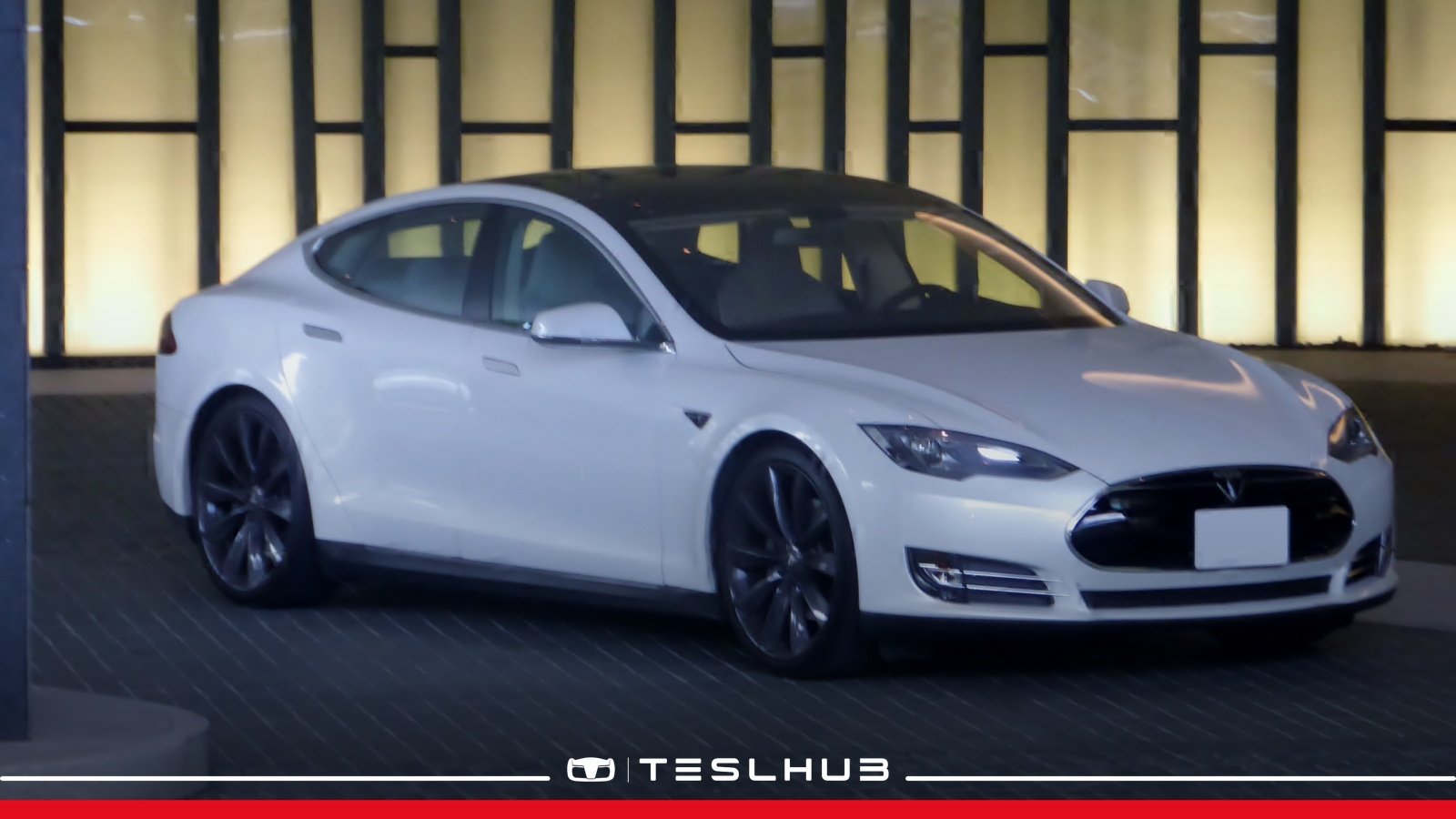
Cover: first-generation Model S, an archive photograph taken on 26 September 2013 by Tokumeigakarinoaoshima, Wikimedia Commons, CC0 1.0. Cropped and overlaid with the original Teslhub PNG. It does not depict the 2012 Fremont event.



Let’s discuss it
Experiences, questions and perspectives from the Teslhub community.
Please keep the discussion respectful. Members’ comments are moderated before publication.
Start the conversation. Leave the first comment.