
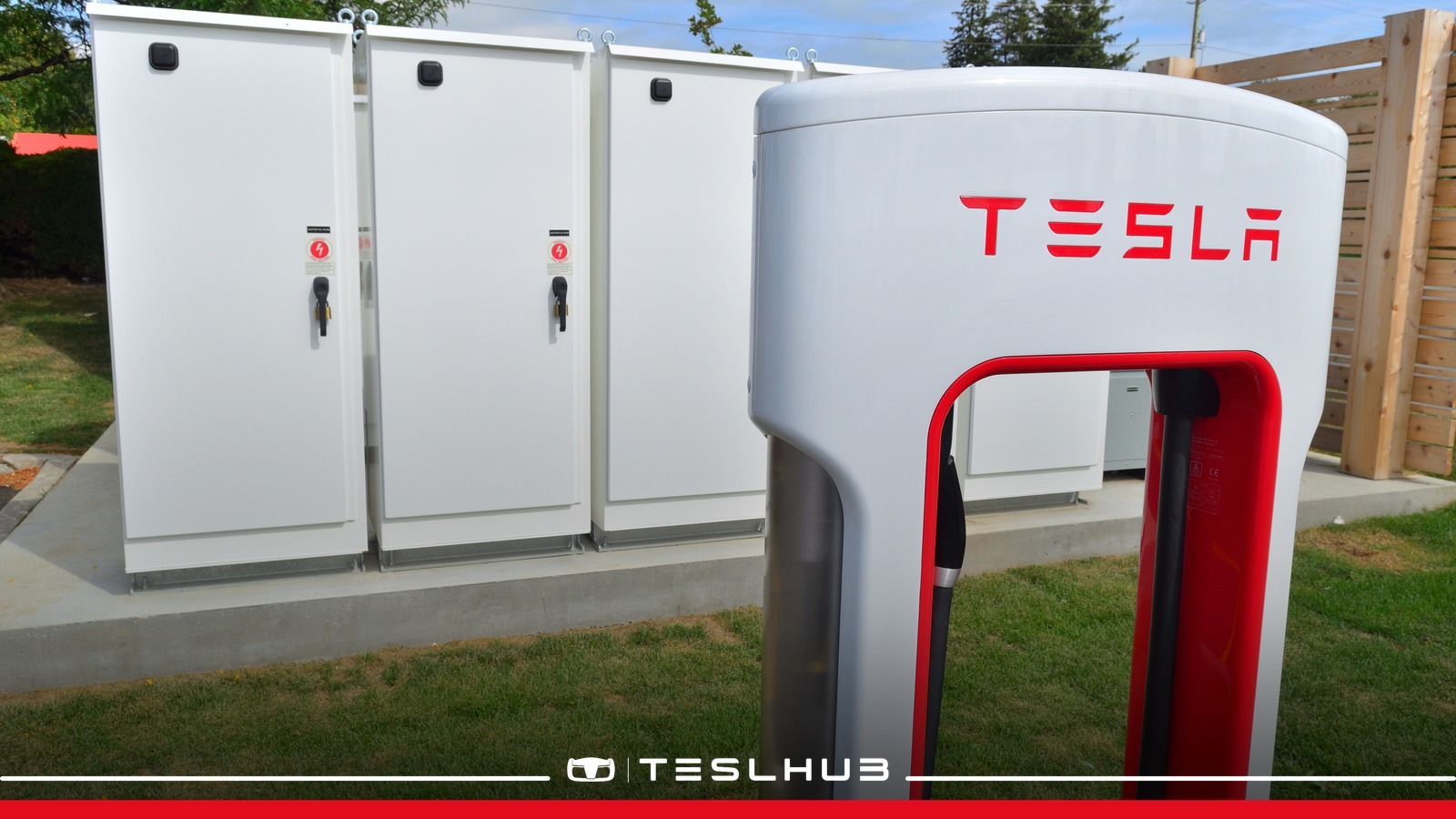
Tesla Powerpack beside a Supercharger, photographed in September 2018. An archive image of energy storage, not the plan’s presentation. Raysonho / Open Grid Scheduler · CC BY-SA 4.0 · Photograph cropped and combined with Teslhub graphics.
Archive article written on 4 November 2026.
Tesla’s Master Plan Part 3, published on 5 April 2023, broadened the perspective beyond cars. Its subject was a possible sustainable global energy economy, built around electrifying end uses and generating and storing sustainable electricity.
A proposal to read alongside its assumptions
Tesla accompanied the proposal with a document setting out assumptions, sources and calculations. It also released the fully electrified US demand profile used in the modelling. This was more than a message about future vehicles: it sought to describe how different parts of the energy system could work together.
A proposal of that kind is distinct from a product timetable. Publishing the plan did not automatically announce a new car for sale or guarantee that every required investment was already funded or under construction. It presented a pathway to discuss and examine through its underlying assumptions.
Generation, consumption and storage are connected
Electrifying an activity moves its demand towards the electricity system. Generating more sustainable electricity and storing some of it addresses another issue: energy may be available at a different time from when it is needed. These are connected questions that an assessment of the vehicle alone cannot resolve.
That perspective makes the document relevant even to readers mainly interested in Tesla cars. A vehicle belongs to a wider system of infrastructure, homes, industry and energy resources. Reading the plan simply as a promise of new models would miss much of its purpose.



Let’s discuss it
Experiences, questions and perspectives from the Teslhub community.
Please keep the discussion respectful. Members’ comments are moderated before publication.
Start the conversation. Leave the first comment.