
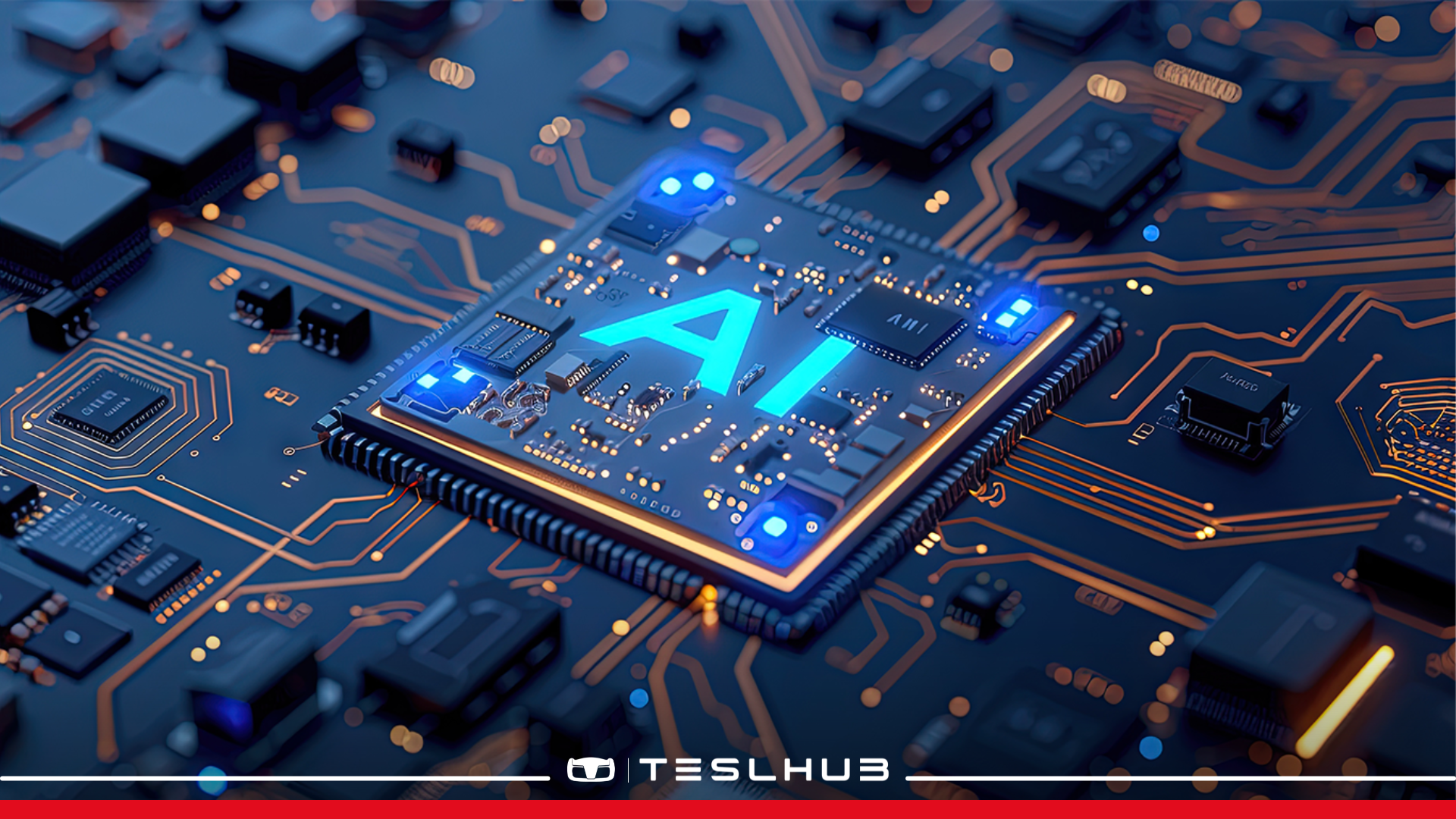
Even before AI5, the successor to HW4, had been formally unveiled, Tesla was looking further ahead to AI6, another generation of chips for its autonomous-driving ambitions. Early reports suggested the project would involve changes not only in computing power, but in how the hardware was designed, manufactured and used.
One chip, one vision
At the time of this report, Tesla trained its AI models on the Cortex supercomputer using Nvidia H200 GPUs, while its cars used proprietary HW3/AI3 or HW4/AI4 hardware. The article described a “two-language problem”: improved models had to be adapted and validated for the chips in the vehicles, adding work between training and deployment.
The report presented AI6 as a way to bring training and in-vehicle deployment onto a more closely aligned hardware architecture. The aim would be to reduce the work needed to transfer neural networks into cars and shorten the development cycle for Full Self-Driving updates. This was a description of the intended direction, not a delivered capability.
Made in Texas, manufactured by Samsung
Elon Musk announced Samsung as the manufacturing partner for AI6, with production planned at its new Texas factory. He also said Tesla would work with Samsung on improving production efficiency, bringing its own manufacturing approach into the project.
That degree of customer involvement in production is unusual. Musk said he intended to walk the factory lines himself to help accelerate processes and support the project’s success.
How would AI6 differ from AI5?
The report expected TSMC-manufactured AI5 in 2026 and described it as a major step beyond AI4. AI6 was projected for 2028, with an emphasis on deeper integration as well as more computing power. These were the timelines discussed at publication.
The broader ambition was a vertically integrated ecosystem, aligning design, training, inference and deployment more closely. Tesla hoped that approach would accelerate development and improve driving capabilities; the intended benefits still had to be demonstrated in released products.
What it meant for Tesla’s longer-term plans
Discussing AI6 before AI5 had been released highlighted Tesla’s ambitions beyond incremental driver-assistance improvements. The company wanted to play a leading role in AI applied to mobility.
Closer hardware and software integration, the Samsung manufacturing partnership and a shorter path from training to deployment all pointed to the same strategy: greater control over the technology chain, with the aim of making it faster, more efficient and easier to scale.
💶 REFERRAL PROGRAMME 🚘
The €500 discount offer described at publication
Click the following link to apply the discount and order the car through the normal purchase process (or copy and paste it into Google):
https://www.Teslhub.com/Sconto
👏 That’s it! Under the offer described at publication, this provided €500 off a new Tesla.
The discount link was also listed in our bio under “Buy a Tesla – €500 discount” and in our website menu under “Buy a Tesla”.
🌐 STAY UP TO DATE 📢
If you do not want to miss any news, these are great places to stay up to date.
Join Teslhub Members: a whole community on Telegram to talk, ask questions and share Tesla experiences with us and other members. Find us on WhatsApp too!
Enjoy the rest of your day. See you in the next article or on our social channels.
Until next time!
Giorgio Rebecchi
Editor


Let’s discuss it
Experiences, questions and perspectives from the Teslhub community.
Please keep the discussion respectful. Members’ comments are moderated before publication.
Start the conversation. Leave the first comment.