
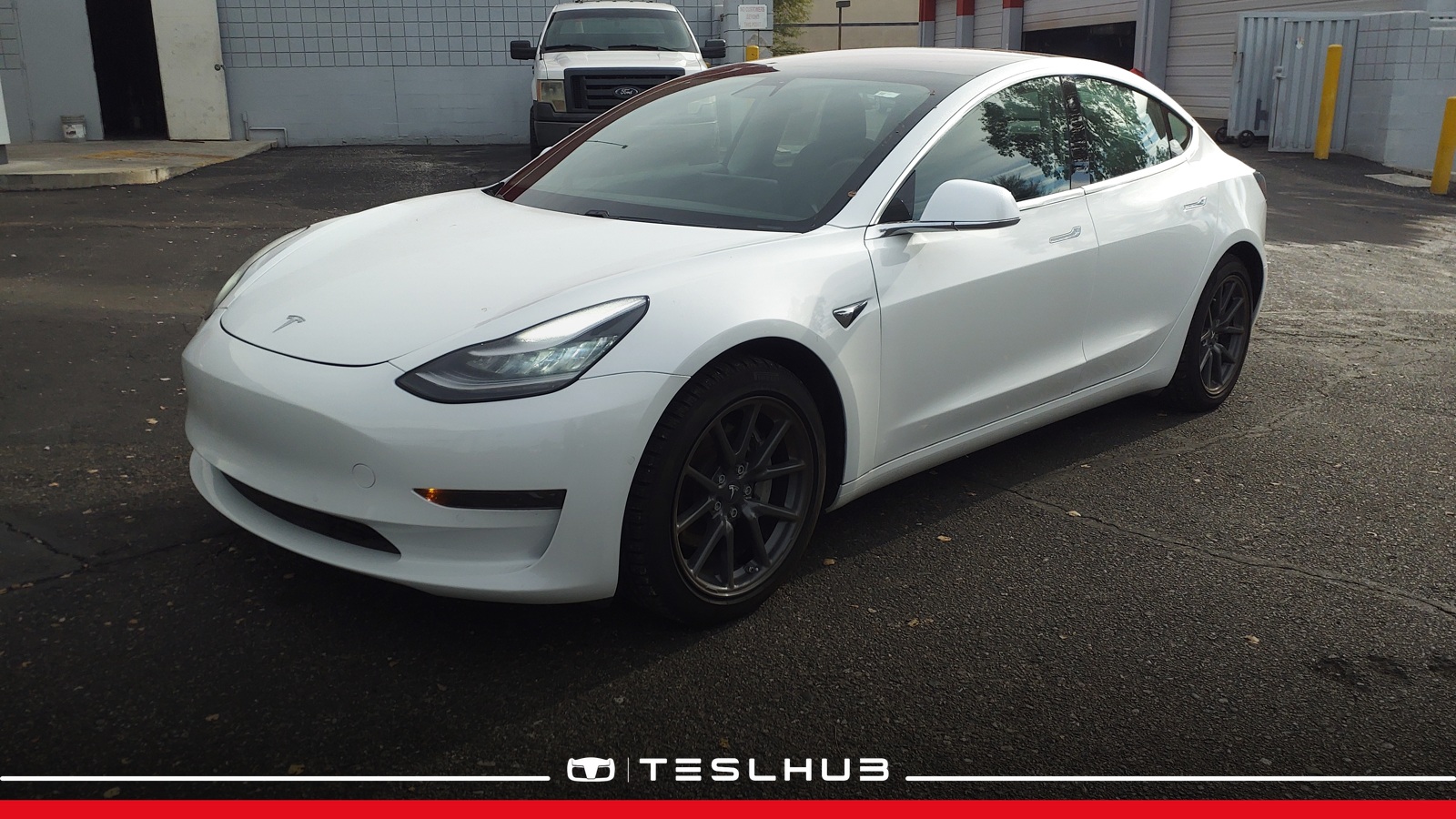
28 July 2017: Model 3 deliveries begin in Fremont. This archive article was prepared in October 2026, including the subsequent production figures from the end of 2017.
On the evening of 28 July 2017, the Model 3 moved from a long wait to its first deliveries. The Fremont event opened a decisive phase for Tesla: adding a saloon designed to reach a wider audience alongside Model S and Model X. Delivering the first cars, however, was only the beginning.
The challenge was no longer demonstrating that an electric car could be desirable. It had to be built in far greater quantities while keeping costs and complexity under control. For Model 3, the stories of the debut and the factory are inseparable. The initial range choices help explain both.
Model 3: deliveries begin on 28 July 2017
In early July, Tesla had already announced a ceremony for around thirty cars at the California factory. Deliveries actually began on 28 July. The first phase involved employees who had reserved the car; progressively opening orders to other customers was a later step.
This start in small groups explains why an evening of handovers did not yet represent a uniform commercial launch. The configurator opened gradually, and availability depended on configuration, queue position and market. The American event did not give Italian customers an immediate delivery date.
Fewer combinations: an industrial choice
The first production cars had rear-wheel drive and the Long Range battery, with a premium equipment package. The entry version and all-wheel drive belonged to the planned range expansion, not the same initial availability. Prices and timings announced then described the plan at that moment.
Tesla stated that the first examples offered fewer than one hundred possible combinations, compared with more than 1,500 for Model S. That number described the complexity of the offering to manage, not how many cars would be built. Reducing variants and grouping options was intended to simplify purchasing, components and assembly.
In this case, simplicity was a decision connecting the product to factory organisation. A broad catalogue gives customers freedom but multiplies the combinations to source and check. Starting with fewer choices meant concentrating work on a more uniform base, without automatically solving every production difficulty.
From the stage to fourth-quarter results
By the end of 2017, the figures showed that ramping up remained demanding. In the fourth quarter, 2,425 Model 3 cars were produced and 1,550 delivered. Another 860 were in transit to customers and would be counted in the following quarter’s deliveries.
- Production: vehicles built in the quarter.
- Deliveries: vehicles actually transferred to customers with completed paperwork.
- Cars in transit: not yet included in deliveries for the period.
Keeping these categories separate allows the launch to be read without turning a forecast into a result. Higher production near the end of a quarter may not immediately appear in deliveries: transport and completion of the paperwork still stand between the factory and the owner.
The first Model 3 thus illustrates a tangible part of Tesla’s development: a product intended to expand the market also required a different way of building cars and organising the range. It is a less immediate story than performance, but essential to understanding why 28 July 2017 still matters in the brand’s archive.
Sources: Tesla’s announcement of the first Fremont deliveries; Tesla’s second-quarter 2017 update; Tesla’s fourth-quarter 2017 production and deliveries.
Cover: 2018 Model 3 Long Range, an archive photograph taken on 6 January 2023 by HJUdall, Wikimedia Commons, CC0 1.0. Cropped and overlaid with the original Teslhub PNG. It does not depict the 2017 ceremony or one of the first delivered cars.



Let’s discuss it
Experiences, questions and perspectives from the Teslhub community.
Please keep the discussion respectful. Members’ comments are moderated before publication.
Start the conversation. Leave the first comment.