
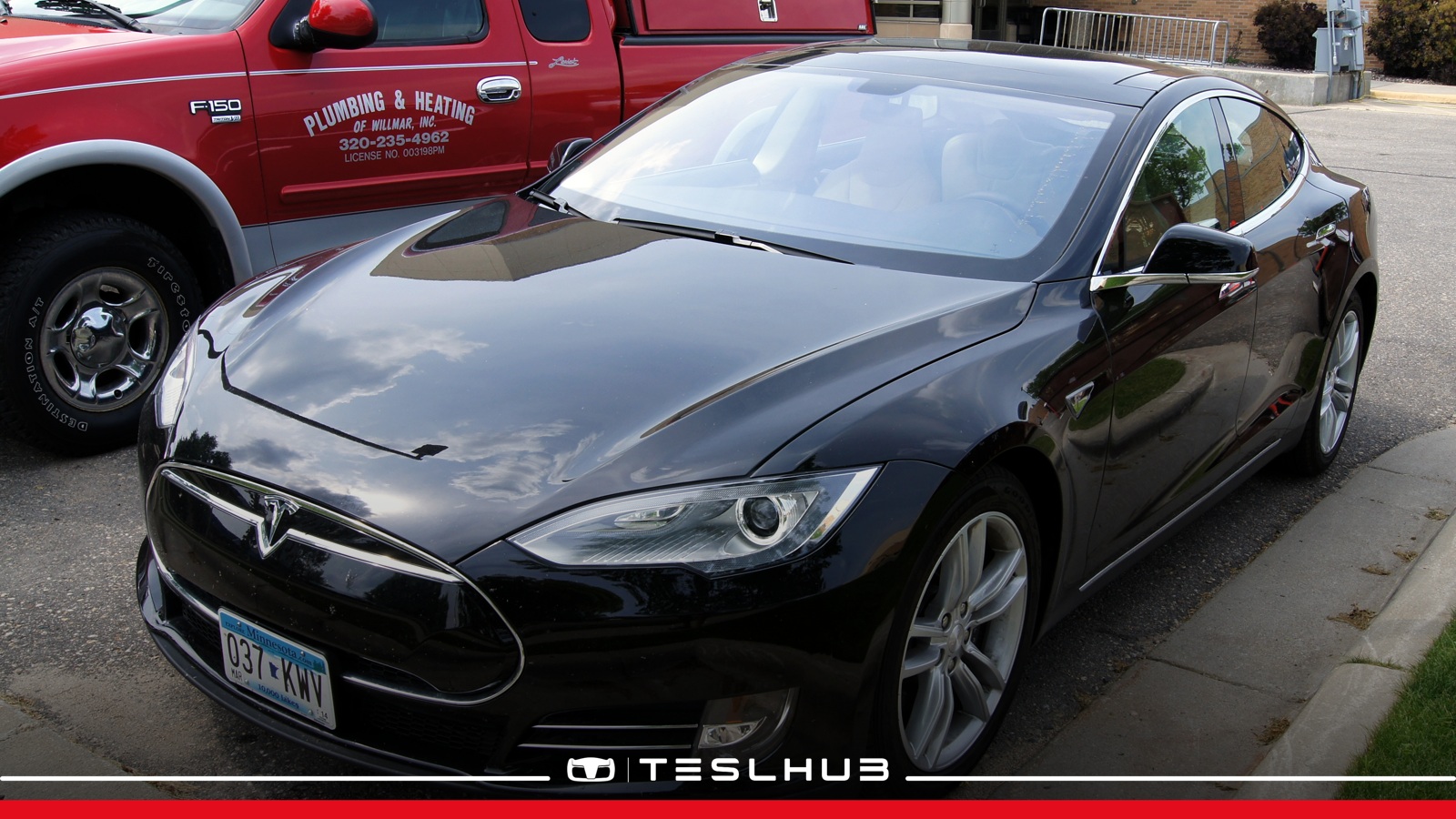
Model S: news from 19 August 2013, United States. This archive article was prepared in October 2026. The result concerns the model year 2013 saloon and the American programme of that period. The archive cover photograph was taken in June 2013 and does not show the crash-tested vehicle.
The Model S had to demonstrate that a large electric saloon could also be assessed on the most tangible aspects of a car. An important milestone came in August 2013: five overall NHTSA stars and five stars in the main categories of the American tests.
For Tesla, which had begun delivering the saloon only the previous year, the result could move the conversation beyond range and acceleration. Safety became something measured in a public programme with defined testing conditions.
Model S: five stars in the main categories
The rear-wheel-drive 2013 Model S assessment recorded five stars overall, five for frontal crashes, five for side impacts and five for rollover resistance. Separate driver and passenger results in the frontal and side tests also recorded the highest rating.
The reference remains that specific car and model year. The assessment cannot automatically be transferred to every version built afterwards, and it is not a European result: the later Euro NCAP test belongs to another programme and another stage in the saloon’s history.
Three scenarios, asking different questions
The NHTSA programme includes frontal, side and rollover tests. In the frontal test, the vehicle strikes a fixed barrier at 35 mph, or around 56 km/h. Dummies allow forces on different areas of the body to be assessed.
Correctly comparing frontal results also requires attention to weight class: star ratings do not make vehicles of different sizes and masses identical. A score is useful when the test context is retained, rather than used as an absolute ranking for any accident.
The rollover category addresses a different question from frontal crash protection. The Model S record also includes the dynamic result “No Tip”, referring to the manoeuvre specified in the protocol. It does not mean the car cannot roll over in other circumstances.
Component layout mattered
Tesla attributed part of the result to its electric architecture. The absence of a large combustion engine ahead of the cabin left room for the front crumple zone, while the battery beneath the floor helped lower the centre of gravity.
These design considerations help explain the car, but do not automatically make every electric vehicle safe. Structure, restraint systems and behaviour in different scenarios must work together. The result belongs to the complete vehicle, not simply to the presence of a battery.
A historical milestone, without extra stars
The official scale has five stars. Promotional wording suggesting a higher score should not be confused with a sixth star or an additional official rating. The public result to remember is the highest rating in the specified categories.
Read today, the 2013 milestone shows a period when Tesla was seeking to establish the Model S as a complete car. The five stars are an important part of that journey. They retain their historical meaning without becoming a promise of absolute protection in every real-world situation.
Sources: NHTSA, 2013 Model S RWD ratings; NHTSA, five-star programme and criteria; Tesla’s release of 19 August 2013.
Archive cover photograph: Greg Gjerdingen, Model S photographed on 20 June 2013, CC BY 2.0. It does not show the tested vehicle. Adaptations: cropping and overlaying the complete original Teslhub PNG. No endorsement by the author is implied.



Let’s discuss it
Experiences, questions and perspectives from the Teslhub community.
Please keep the discussion respectful. Members’ comments are moderated before publication.
Start the conversation. Leave the first comment.