
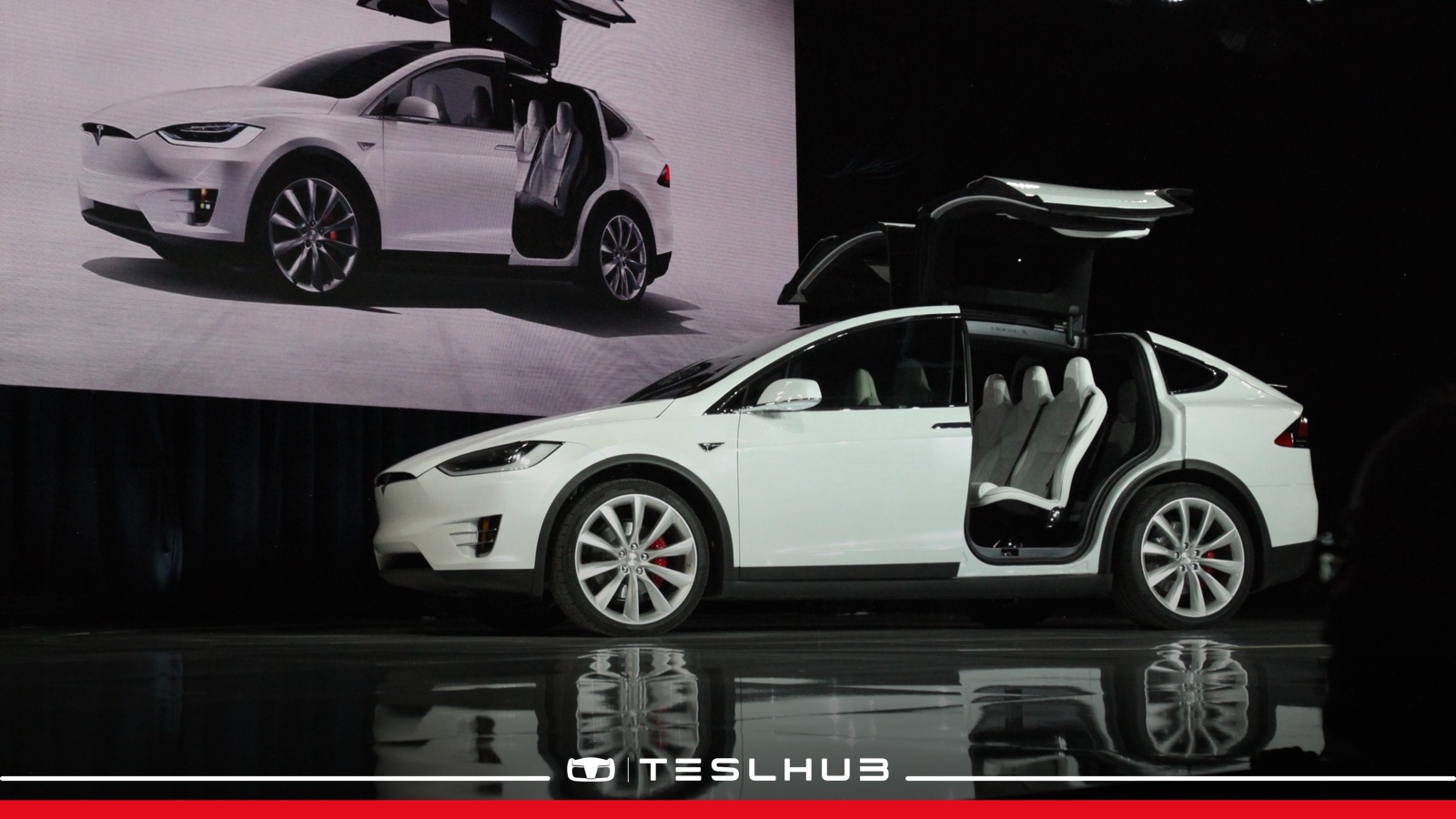
Historical news from June 2017, United States. This archive article was prepared in October 2026. The result is reconstructed from NHTSA’s model year 2017 database and Tesla’s report of 2 August 2017. The cover is an archive photograph from the 2015 launch, not the tested vehicle.
The Falcon Wing doors drew attention, but in 2017 the Model X offered another reason to make headlines: five overall NHTSA stars and five in the main assessment categories. For the electric SUV, this was a tangible milestone based on accessible tests and results, beyond the appeal of its dramatic doors.
The reference is American. Revisiting the news requires distinguishing the NHTSA programme from European tests and, above all, avoiding turning an excellent score into a promise for every accident.
2017 Model X: the results in NHTSA’s database
The official record for the all-wheel-drive model year 2017 Model X 75D SUV, vehicle ID 11815, lists five stars overall. Frontal protection also earns five stars for both the driver and front passenger.
The same score appears for side impacts, the combined barrier-and-pole assessments for front and rear seating positions, and the pole test. Rollover resistance also receives five stars. Tesla’s quarterly report published in August places the recognition in June 2017.
Choosing an identified configuration prevents the account from drifting from one model into its entire history. A 2017 Model X and later generations share a name, but that does not make every technical figure, feature or result automatically transferable between them.
Five stars do not mean a rollover is impossible
The record lists “No Tip” in the dynamic test and a 9.3% rollover probability in the programme’s indicator. These figures should be read together: the vehicle did not tip over during that manoeuvre, but the result does not establish zero risk.
That percentage is not an individual owner’s personal probability of rolling over on a journey. It is an assessment-system indicator referring to the conditions and risk model used. Presenting it as a guarantee for everyday driving would change the meaning of the figure.
Why star ratings need their methodology
NHTSA assesses frontal crashes, side impacts and rollover resistance. For frontal and overall comparisons, it specifies vehicles in the same class with weight within around 113 kilograms. Five stars therefore do not justify an absolute ranking between a light saloon and a much heavier SUV.
Nor should an American score be mistaken for a Euro NCAP result. The organisation, year and protocol are as much part of the news as the car’s name. Without these details, two visually similar symbols can suggest comparability that has not been demonstrated.
A specific chapter in the SUV’s history
Preserving the 2017 result allows the Model X’s development to be followed without reducing its history to current versions. The launch describes the product’s arrival; a safety assessment documents another milestone with its own questions and tools.
The historical value of the five stars remains clear precisely because the context stays in place: an identified SUV, configuration and test programme. The result is interesting without adding superlatives that the numbers alone cannot support.
Sources: NHTSA, record 11815 for the 2017 Model X 75D; Tesla’s second-quarter 2017 report, 2 August 2017 (original document filed with the SEC); NHTSA, methodology and comparison limits.
Archive cover photograph: Steve Jurvetson, Model X at the 29 September 2015 launch, CC BY 2.0. It does not show the crash-tested vehicle. Adaptation: cropping and overlaying the complete original Teslhub PNG. No endorsement by the photographer is implied.



Let’s discuss it
Experiences, questions and perspectives from the Teslhub community.
Please keep the discussion respectful. Members’ comments are moderated before publication.
Start the conversation. Leave the first comment.