
Historical news from 19 June 2024, United States. This archive article was prepared in October 2026, with a note on the subsequent July 2024 revision. It reconstructs two recall campaigns from that period and does not certify an individual vehicle’s current status.
A windscreen wiper that could stop working and exterior trim that could loosen: in June 2024, the Cybertruck was subject to two separate recalls, both requiring physical work on components. One concerned the driver’s visibility; the other also concerned the safety of people following the pickup.
Understanding the news means separating the defects and affected populations. The campaigns had different codes and production windows. Simply adding their counts could have counted the same vehicles twice.
Cybertruck: the wiper motor recall
NHTSA campaign 24V-456, identified by Tesla as SB-24-17-006, covered 11,688 potentially affected model year 2024 Cybertrucks built from 13 November 2023 to 6 June 2024.
The problem concerned control of the front windscreen wiper motor: excessive electrical stress could damage a component called the gate driver and stop the motor working. In certain conditions, losing windscreen clearing could reduce visibility and increase collision risk.
The proposed remedy was replacing the motor with a functioning component at no charge to the customer. The fault’s electrical nature did not make it something solvable simply by downloading new software.
A second defect along the load bed
Campaign 24V-457, Tesla reference SB-24-12-006, instead concerned the decorative trim known as the sail applique, bonded along the outside of the bed. Incorrect installation of the part or adhesive could cause it to loosen or detach.
The risk differed from the wiper issue: a piece separating while driving could become a road hazard for other motorists. Tesla planned to replace or rework the trim to secure it to specification.
The original report of 19 June listed 11,383 potentially affected vehicles, produced from 13 November 2023 to 26 May 2024. A revision filed on 29 July subsequently listed 12,150 units. These numbers belong to different versions of the same campaign, not two recalls to be added together.
Recalled vehicles and confirmed failures are not the same
A campaign’s count defines the population to be addressed. It does not show that every vehicle has already exhibited the defect. The wiper report estimated 2% with the defect; the original trim report estimated 1%.
These percentages were estimates in the respective campaigns, not measurements of an individual’s accident risk. Possible overlap between the groups also requires care: the totals do not automatically reveal how many distinct Cybertrucks needed repair.
Two service repairs, not two OTA updates
Both solutions required physical work: replacing the wiper motor or restoring the trim’s attachment. This is the news’s most important practical detail because it shows how broad the word “recall” is. It can involve very different operations, even on a vehicle that can receive over-the-air updates.
For an individual vehicle, the reference remains an official VIN check and its service history. Model year, a photograph or the absence of symptoms cannot prove whether a campaign is outstanding or completed. The historical account explains what happened; checking one vehicle answers a different question.
Sources: NHTSA, report 24V-456 of 19 June 2024; NHTSA, original report 24V-457 of 19 June; NHTSA, revision 24V-457 of 29 July; Tesla, wiper motor replacement; Tesla, VIN recall check.
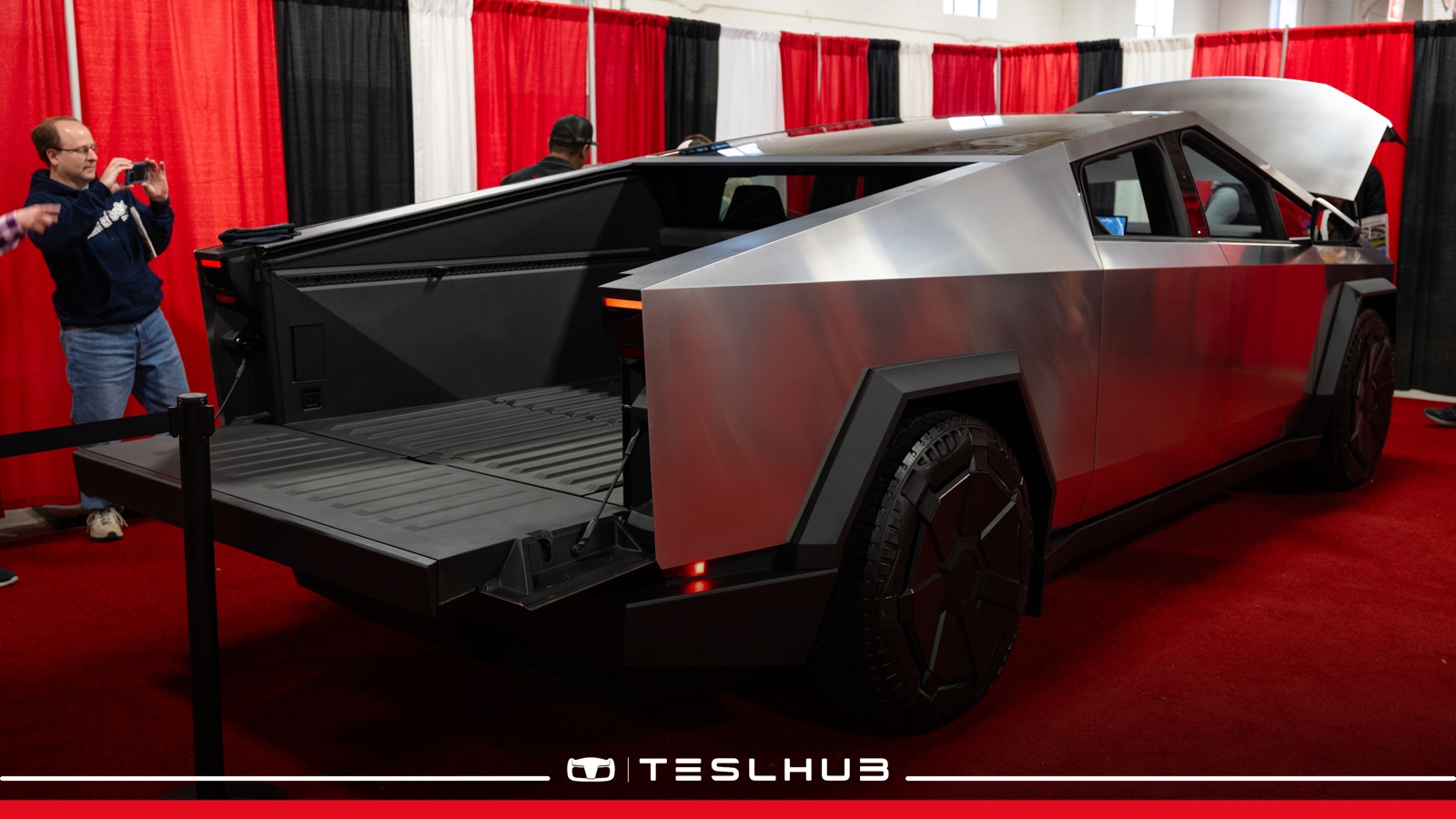
Archive cover photograph: Erik Drost, 2024 Cleveland Auto Show, 3 March 2024, CC BY 2.0. The displayed vehicle is not identified as defective or subject to the recall. Adaptation: cropping and overlaying the complete original Teslhub PNG. No endorsement by the photographer is implied.




Let’s discuss it
Experiences, questions and perspectives from the Teslhub community.
Please keep the discussion respectful. Members’ comments are moderated before publication.
Start the conversation. Leave the first comment.