
Historical news from April 2016, with the details announced on 4 May 2016. This archive article was prepared in October 2026. It reconstructs the update of that time, not current equipment or commercial terms.
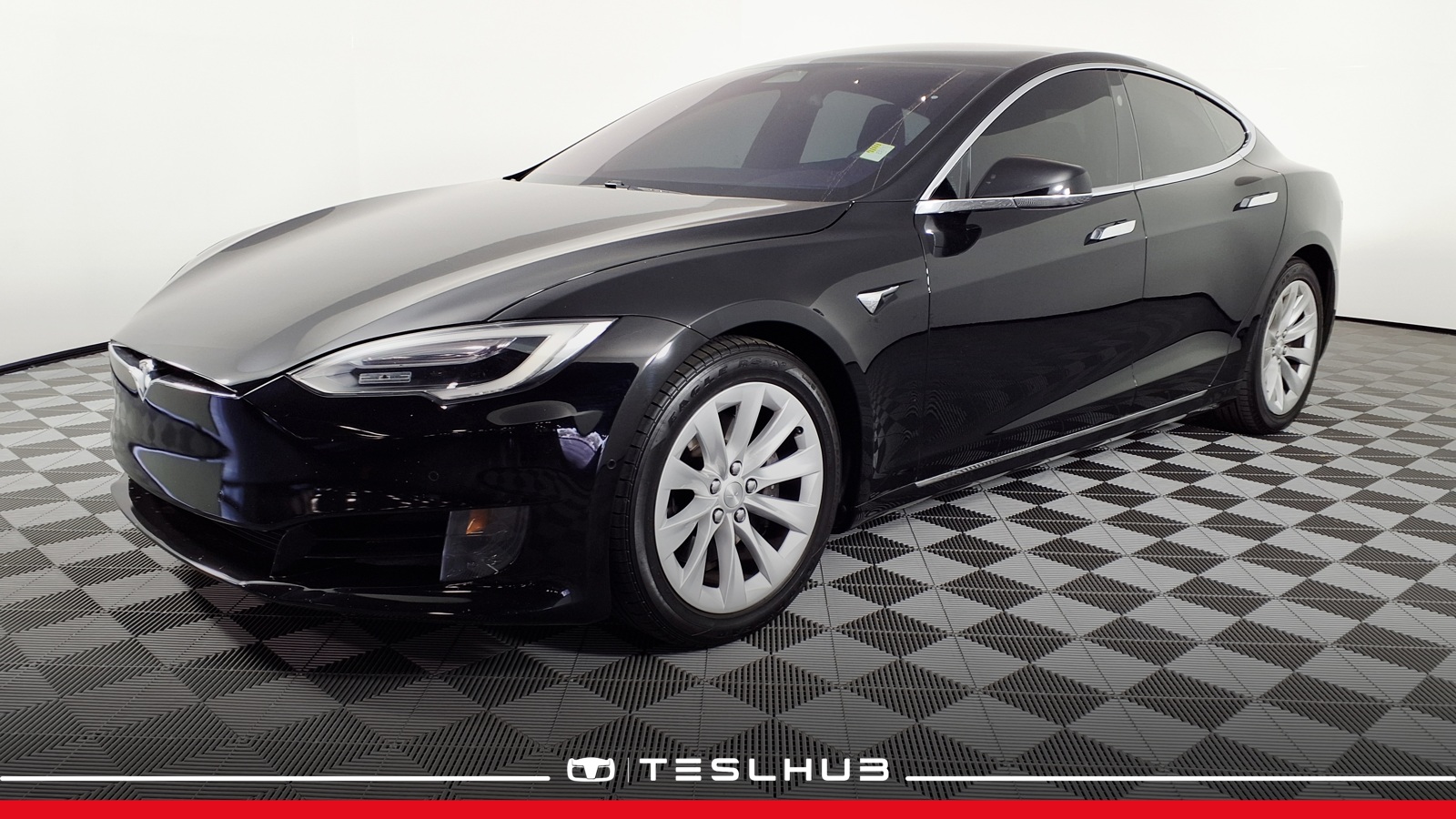
You can often recognise an early Model S simply by looking at its face. In spring 2016, the large black element in the centre of its nose gave way to a cleaner, body-coloured front. It was an immediately visible change, but the 2016 Model S facelift went beyond bumper shapes: it involved lighting, charging and cabin air treatment.
That transition captures a particular phase in Tesla’s history. The saloon continued to evolve as the company expanded its range, and its visual relationship with Model X became clearer. The car remained recognisable without being frozen in its launch configuration.
The Model S front end changes identity
The most obvious difference was the disappearance of the large dark oval that defined the original nose. The painted surface and slim central area around the badge created a simpler design. This detail still makes the first Model S’s two styling phases distinguishable at a glance.
The production cut-off between the two front bumper generations was 10 April 2016. This is a manufacturing reference, not a universal delivery date: a car registered in 2016 may have an earlier configuration.
Almost 300 changes, beyond the styling
In May 2016, Tesla described the refresh as the largest set of hardware changes yet introduced on Model S: almost 300 component changes. That number indicated work extending much further than the new nose alone suggested.
The changes included adaptive headlights, developments in charging and increased range, plus the arrival of the HEPA filtration system already offered on Model X. The package therefore also addressed everyday use. Equipment depended on configuration: availability of HEPA did not make every variant identical. Bioweapon Defense was the feature’s commercial name, not a guarantee of health protection.
Store availability was not simultaneous
The spring refresh did not mean immediate availability everywhere. In its subsequent August 2016 report, Tesla stated that refreshed Model S cars had not been in stores throughout the second quarter and had reached international markets only in June.
Reading the news correctly therefore requires distinguishing presentation, production, display and delivery. A reference to international markets does not by itself identify a date applicable to every Italian customer. Prices, equipment and available combinations also require the context of the individual market at that time.
A new body cannot be downloaded in an update
Around the same period, the range also included 60 kWh configurations upgradable to 75 kWh through a paid software unlock. This was a separate initiative from the facelift: a commercial option for those vehicles, not an update capable of changing bumpers or installing new headlights.
This overlap between physical and software development makes 2016 interesting. The new face offers a useful clue but cannot fully identify an individual car’s battery, options and equipment. In the Model S archive, the facelift remains above all the moment when an already continuous transformation became clearly visible from outside.
Sources: Tesla’s Q1 2016 update of 4 May; Tesla’s Q2 2016 update of 3 August; Tesla, identifying front bumper generations.
Archive image: 2017 Model S 75, photographed by HJUdall on 17 September 2025, Wikimedia Commons, CC0 1.0. It illustrates the front end of the post-facelift generation, not a car photographed at the April 2016 debut. The cover uses a crop of the photograph and the complete original Teslhub PNG.



Let’s discuss it
Experiences, questions and perspectives from the Teslhub community.
Please keep the discussion respectful. Members’ comments are moderated before publication.
Start the conversation. Leave the first comment.