
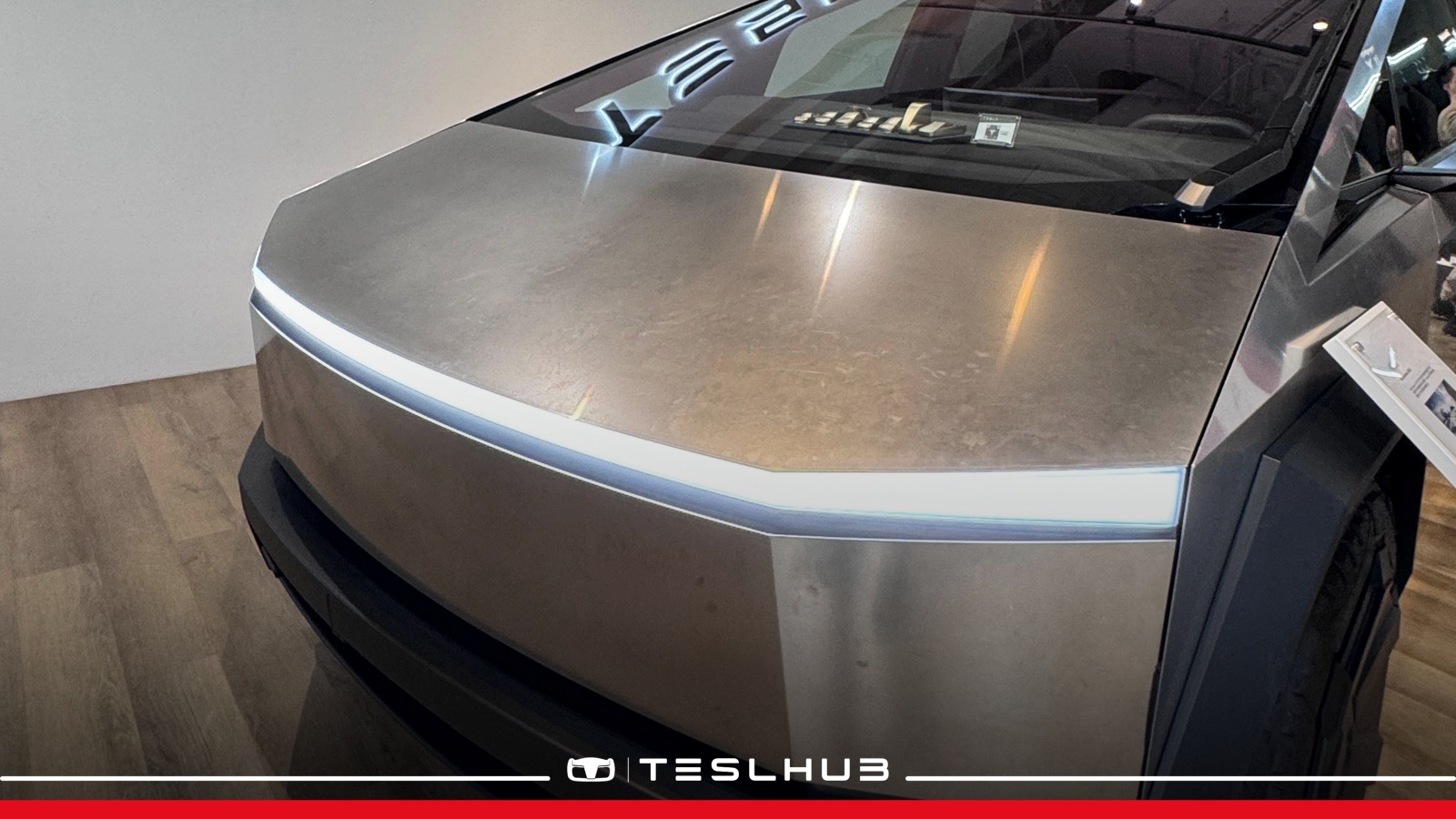
First quarter of 2025: Cybertruck earns five overall NHTSA stars, a result mentioned in Tesla’s update of 22 April. This archive article was prepared in October 2026 and refers to the model year 2024 vehicle assessed in the United States.
The Cybertruck’s shape had attracted attention since its unveiling. In 2025, the debate about its design gained a more tangible element: a five-star overall rating in the US NHTSA programme. It was an important result for the electric pickup, best read alongside the scores for individual tests.
Five stars overall did not mean five stars in every category. The assessment for the model year 2024 Cybertruck distinguished frontal crash protection, side impact protection and rollover resistance. Looking only at the overall score would have hidden useful differences.
Cybertruck: the overall rating and the differences
The overall rating was five stars. The combined frontal crash rating also reached five stars, but the front seats differed: five for the driver and four for the passenger. Side protection earned five stars overall, as did the driver and rear passenger categories in the side test.
Rollover resistance received four stars. The dynamic component of the assessment recorded “No Tip”, meaning the vehicle did not tip during that particular test manoeuvre. This does not mean a rollover on the road is impossible: it describes the outcome of the test within its specific conditions.
A programme with defined scenarios
In the NHTSA programme, the frontal test involves an impact against a fixed barrier at 35 mph, or around 56 km/h. The scenario represents a collision between vehicles of similar mass. Frontal ratings should therefore be compared between cars in the same weight class, within 250 pounds above or below, or around 113 kg.
The side tests cover different scenarios: a moving barrier striking the vehicle’s side and an impact against a pole. They do not repeat the frontal test or measure every possible accident. Combining several scenarios reveals different aspects of protection while retaining a clear understanding of what each test describes.
This approach helps avoid two shortcuts: treating the score as a personal guarantee, or turning it into an absolute comparison with any other vehicle. Real-world safety also involves driver behaviour and road conditions. A standardised test provides a reference, not a prediction for every journey.
A chapter in the pickup’s history
Tesla highlighted the result in its first-quarter 2025 update. That is its timeframe: a milestone in the Cybertruck’s assessment after deliveries began, not news from 2026. The NHTSA record considered here identifies the all-wheel-drive model year 2024 pickup.
The US result should not be presented as a Euro NCAP assessment or as approval for sale in Italy. Ratings from other organisations must also remain distinct because their programmes, tests and criteria are not interchangeable.
For the Cybertruck, the five-star result added data to the story of a much-discussed project. The most useful detail is precisely what a headline tends to compress: the overall rating is a starting point, while the separate results reveal strengths and differences.
Sources and credits
- NHTSA, model year 2024 Cybertruck results, vehicle ID 19998.
- NHTSA, 5-Star Safety Ratings programme and test criteria.
- Tesla’s first-quarter 2025 update, 22 April.
Cover: X120412 / Wikimedia Commons, CC0 1.0, 12 July 2025. Archive photograph of a Cybertruck on display, not the crash-tested vehicle. Cropped and overlaid with the complete original Teslhub PNG.



Let’s discuss it
Experiences, questions and perspectives from the Teslhub community.
Please keep the discussion respectful. Members’ comments are moderated before publication.
Start the conversation. Leave the first comment.