
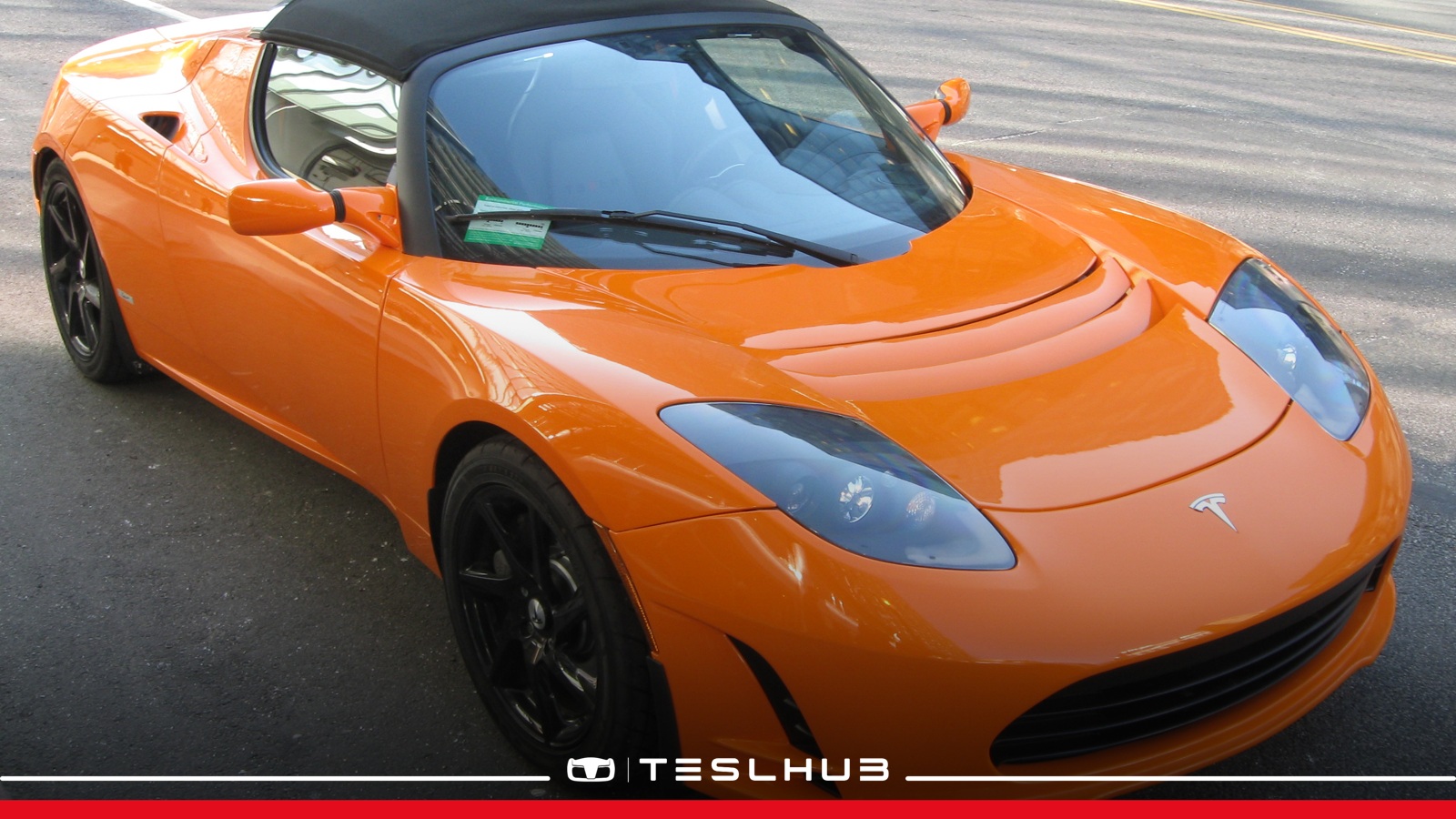
17 March 2008: regular production of the Tesla Roadster begins. This archive article was prepared in October 2026, including the subsequent European announcement in April 2008.
Before the saloons, SUVs and large factories, the Tesla Roadster was a two-seat sports car with a demanding task: demonstrating that an electric car could convince people through the desire to drive it. On 17 March 2008, the project reached a specific industrial milestone: the start of regular production. The prototype was beginning to give way to the product.
That transition deserves to be remembered for what it was, without projecting Tesla’s later high-volume manufacturing onto it. The original Roadster belonged to a phase of modest numbers, technical problems to solve and decisions that would change during the model’s life. It is not the next-generation Roadster announced many years later.
Tesla Roadster: the March 2008 milestone
The prototype had first been presented on 19 July 2006. Less than two years later, the production-start release reported more than nine hundred reservations in total. The 2008 allocation was already fully reserved, while reservations were being taken for the 2009 model.
A reservation, however, is not a delivery. Those figures described accumulated interest and the order book, not nine hundred cars already on the road. The distinction is particularly important for a manufacturer still turning a promising design into continuous production.
The first cars and an interim solution
In January 2008, Tesla had announced the approvals needed to import and sell its first production example, designated P1, in the United States. Series production was scheduled to start on 17 March. The programme also made a compromise explicit: the first units would use an interim transmission that met durability requirements but limited acceleration.
The stated zero-to-60 mph time for that configuration was 5.7 seconds. In parallel, the final solution was under development to support the original target of around four seconds. These figures refer to zero–60 mph, not zero–100 km/h. Treating the two measures as equivalent would make the account inaccurate.
This detail brings the history into focus. Production did not begin with every difficulty already resolved, and not all first-generation Roadsters had the same configuration. Performance figures for later developments therefore cannot automatically be assigned to the first 2008 examples.
April opens another chapter
On 8 April, Tesla announced that European customers could reserve a dedicated series, with deliveries expected from spring 2009. The European region was allocated 250 cars from the special version. Here too, the schedule distinguished the opening of reservations from cars actually arriving.
The European debut of the production model was planned for Top Marques Monaco from 24 to 27 April. Thus, 2008 marked both the industrial start and an attempt to build a presence beyond the American market. It did not mean immediate availability in every European country, and the commercial terms of the time do not represent an offer valid today.
Part of this small sports car’s importance lies in the gap between its size and the job it had to do for Tesla. It was more than the beginning of a price list: it brought the project face to face with the real demands of production, reliability and customers. That start was less straightforward than a single date suggests, which makes it all the more interesting to revisit.
Sources and photograph
- Tesla Motors, the start of regular production, release giving the event date as 17 March 2008.
- Tesla Motors, approvals and production schedule, 22 January 2008.
- Tesla Motors, the start of European sales, 8 April 2008.
Cover: IFCAR / Wikimedia Commons, photograph released into the public domain. Archive image of a first-generation Roadster, catalogued on 11 February 2011 in Washington. It does not show the 2008 production start or identify one of the first examples. Cropped and overlaid with the original Teslhub PNG.



Let’s discuss it
Experiences, questions and perspectives from the Teslhub community.
Please keep the discussion respectful. Members’ comments are moderated before publication.
Start the conversation. Leave the first comment.