

Tesla was reportedly preparing several new battery variants for its future vehicle range, including the Cybertruck and Robotaxi. The original article discussed those plans ahead of the Robotaxi unveiling scheduled for 10 October 2024, with a reported development horizon extending to 2026. The anticipated benefits concerned charging performance and range. They were development reports and expectations, rather than confirmation that particular batteries were available in customer vehicles.
Tesla’s plans for new cells
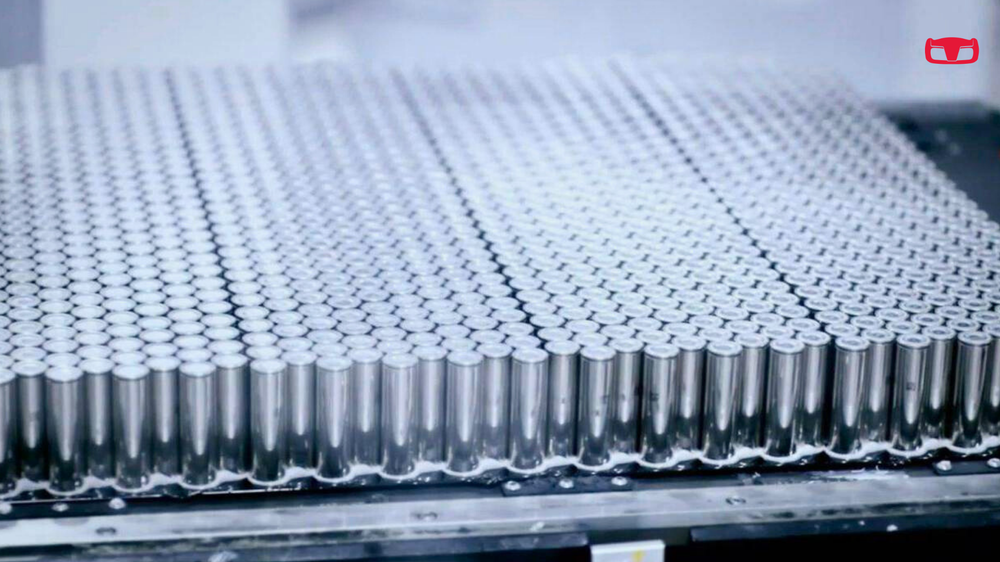
The reports centred on Tesla’s 4680 cell and efforts to improve manufacturing and energy storage. The original article described an end-of-2024 goal for dry-coated cathode cells for Cybertruck, alongside a reported output target of 2,000–3,000 vehicles a week. The underlying Tesla schedule and production target were not independently confirmed. Four reported cell variants were named NC05, NC20, NC30 and NC50. These names and targets were reported plans, not an official product catalogue. Dry electrode coating is a manufacturing process and should not be confused with replacing a liquid electrolyte with a solid one.
The reported NC05 variant was associated with the planned Tesla Robotaxi. A cell designed around a particular vehicle’s needs could influence cost, efficiency and production strategy. However, the report did not establish a confirmed customer specification or prove that an autonomous transport service was ready for general deployment.
CATL’s announcement: a claimed 1,000 km on one charge
Battery supplier CATL had separately announced its Shenxing PLUS lithium iron phosphate battery at Auto China in April 2024. CATL claimed a range exceeding 1,000 km and the ability to add 600 km in ten minutes under its stated conditions. These were the supplier’s performance claims, not a WLTP range specification for a Tesla. Although CATL supplies Tesla, that relationship alone did not confirm that this particular technology would be fitted to a Model 3 or any other Tesla vehicle.
What these developments could mean for electric mobility
Better batteries and faster charging could address two persistent concerns for electric-car buyers: range and time spent charging. Shorter stops and greater usable range can make EVs more attractive for a wider variety of journeys. The importance of the reported Tesla developments and CATL’s announcement therefore extended beyond individual specifications. Their eventual impact would depend on successful manufacturing, cost, real-world performance and the vehicles in which the technology was deployed. The years following these announcements would show how far the promises translated into practical benefits.
REFERRAL PROGRAM
The original article’s referral offer
The original article described a €1,000 referral discount. That was a historical offer, subject to the programme’s terms at the time; check the current terms before ordering.
Use the following link and follow Tesla’s ordering process. If needed, copy it into your browser:
https://www.Teslhub.com/Sconto
✔️ That completes the referral step.
The €1,000 benefit described belonged to the original offer period; it is not a promise of a current discount.
Teslhub is also on Telegram and WhatsApp!
Follow our channels to keep up with the latest news.
Join Teslhub Members, our Telegram community, to talk, ask questions and share Tesla experiences with us and other members.
We hope you enjoyed the article. See you in the next one, or on our social channels.
See you soon!
Giorgio Rebecchi
Editor




Let’s discuss it
Experiences, questions and perspectives from the Teslhub community.
Please keep the discussion respectful. Members’ comments are moderated before publication.
Start the conversation. Leave the first comment.