

In September 2024, Italy was urging the European Union to review the rules leading towards zero tailpipe CO₂ emissions from new cars in 2035. The government argued that the pace of change could put European car manufacturing at risk and did not adequately reflect market conditions. This article records that political debate, rather than a statement of legislation or government positions today.
An industry under pressure
As discussed in this article, the framework adopted in 2023 set a 100% reduction target for new-car and van fleet CO₂ emissions from 2035, effectively excluding ordinary new petrol and diesel models. It did not ban continued use of existing vehicles. Italian ministers argued that a rapid transition could leave European manufacturers such as Volkswagen and Stellantis at a disadvantage to US and Chinese competitors. They pointed to the support those competitors received and called for a more gradual, technology-neutral approach, including discussion of hybrids and hydrogen. These were policy arguments, not proof that industrial collapse was inevitable or that every alternative met the regulation’s requirements.
The electric-car market’s difficulties
The original report described pressure on European EV demand, production cutbacks and the prospect of plant closures at Volkswagen, with consequences for workers. It also cited a 36% fall in Stellantis’s Italian production and a 63% decline at Mirafiori, alongside a 30-day production stop. Its attribution of the production comparison to the first half of 2023 requires checking against the underlying period data; the figures are recorded here as claims in the historical article, not independently verified statistics or a single-cause explanation of the industry’s difficulties.
The article attributed to industry minister Adolfo Urso the view that the incoming European Commission needed to address the issue promptly and give companies and workers greater clarity. The concern extended beyond manufacturers to suppliers, employment and the wider economy.
Could Europe remain competitive?
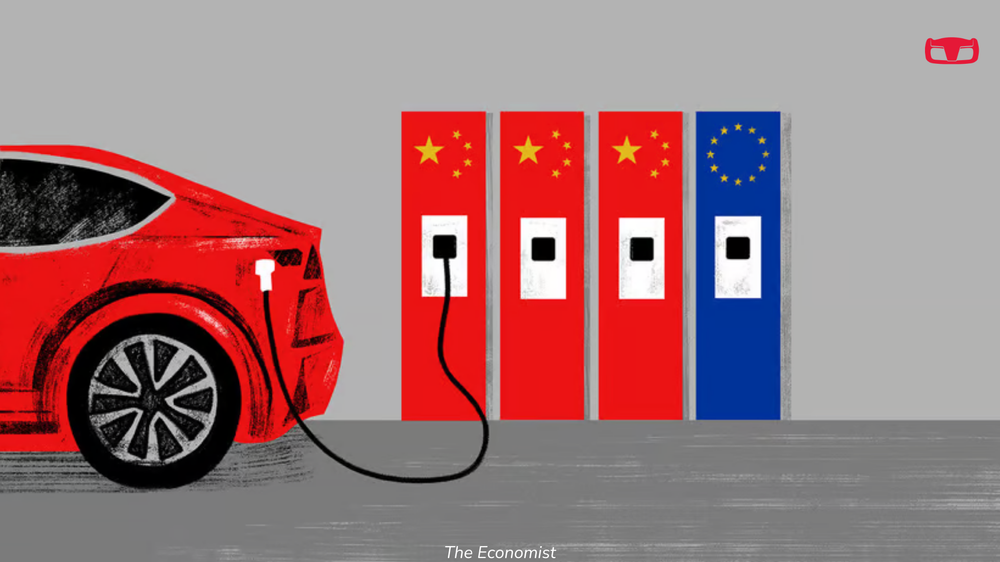
Competition from lower-priced EVs, particularly Chinese-made models, was another theme. The report discussed tariffs and manufacturers’ pressure to meet tighter fleet-emissions requirements from 2025. Trade measures did not remove competitive pressure, and the cost of meeting emissions targets was only one factor shaping companies’ decisions. Italy’s demand for a review therefore concerned industrial policy as well as environmental goals. The original author also argued that manufacturers retained responsibility for adapting their products and business models when markets and legislation changed. The outcome depended on those choices alongside public policy, rather than a single decision guaranteeing the future of the entire European industry.
💶 REFERRAL PROGRAM 🚘
The referral offer described at publication: €500 off a new Tesla. This is a historical offer, subject to the terms applicable at the time.
Follow the referral link and complete the normal vehicle-ordering process. If the link does not open, copy it into your browser. Eligibility and benefits depend on the terms available when ordering.
https://www.Teslhub.com/Sconto
👏 Under the offer described at publication, eligible orders could receive €500 off a new Tesla.
The original instructions also directed readers to the link in our profile under “Buy a Tesla – €500 off” and to “Buy a Tesla” in the website menu. The wording and offer may have changed since publication.
Follow these channels to keep up with the latest news.
Or join Teslhub Members, our Telegram community, to ask questions, chat and share Tesla experiences with us and other members.
We look forward to seeing you in the next article or on our social channels. 🌐
See you soon!
Giorgio Rebecchi
Editor



Let’s discuss it
Experiences, questions and perspectives from the Teslhub community.
Please keep the discussion respectful. Members’ comments are moderated before publication.
Start the conversation. Leave the first comment.