
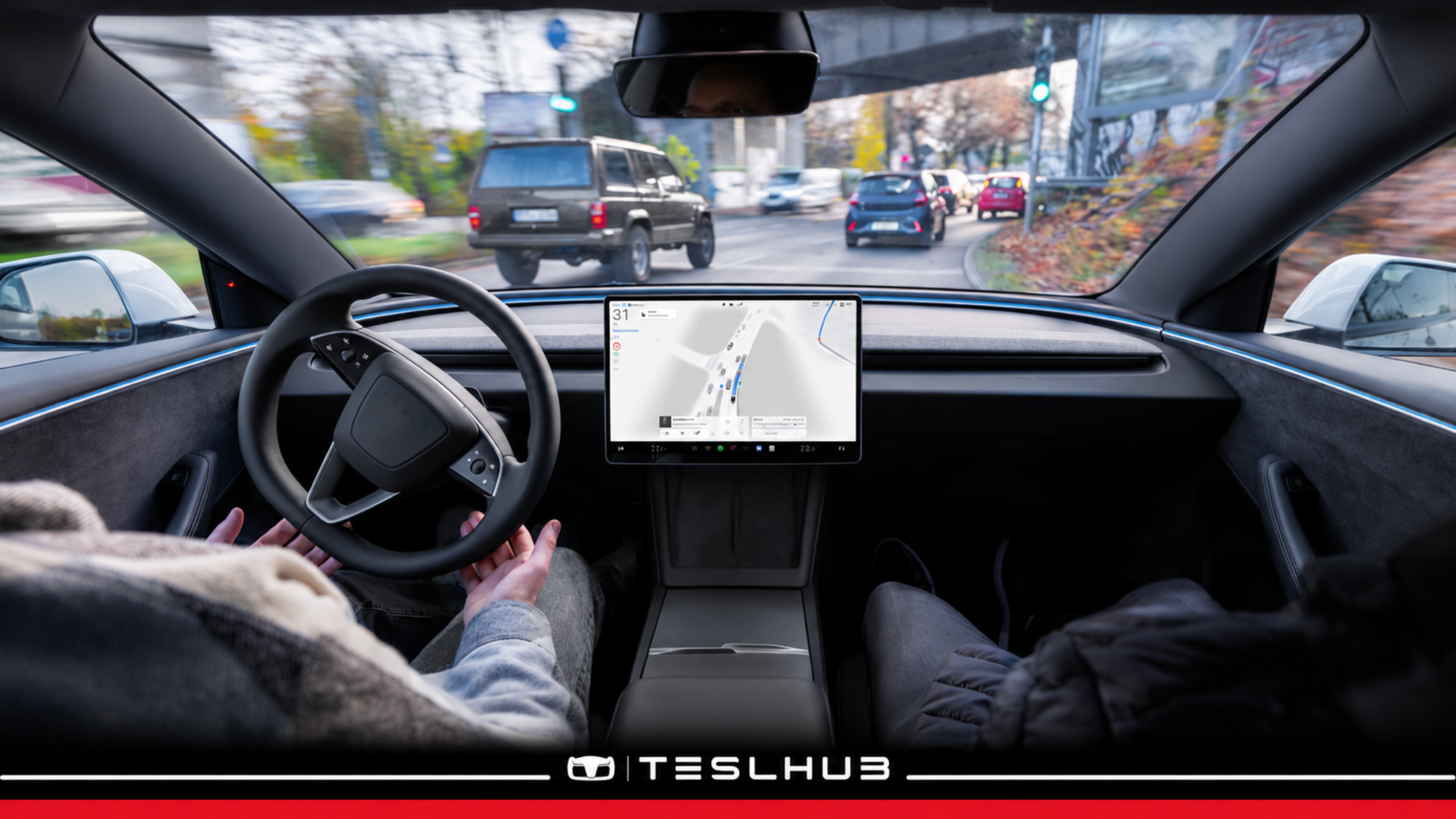
Tesla Assisted Driving is taking another step in its European journey. Dutch authority RDW has assessed and approved a new set of changes for Tesla vehicles equipped with HW4 or newer hardware: driver warnings will change, safeguards against misuse will increase and, above 130 km/h, hands will have to remain on the steering wheel.
This is more than a visual adjustment. The changes affect how the system monitors attention, handles certain maneuvers and communicates speed-related decisions. The update will arrive over the air, although Tesla will determine its timing and distribution.
Hands on the wheel above 130 km/h
The most immediate change concerns higher motorway speeds. Above 130 km/h, the driver will be required to keep their hands on the steering wheel while Tesla Assisted Driving is active.
The threshold creates a clear distinction between attention monitoring and physical contact with the wheel. Below that speed, the system continues to follow the logic defined by its approval; above 130 km/h, steering-wheel contact becomes an explicit requirement.
Earlier warnings and a full strike during maneuvers
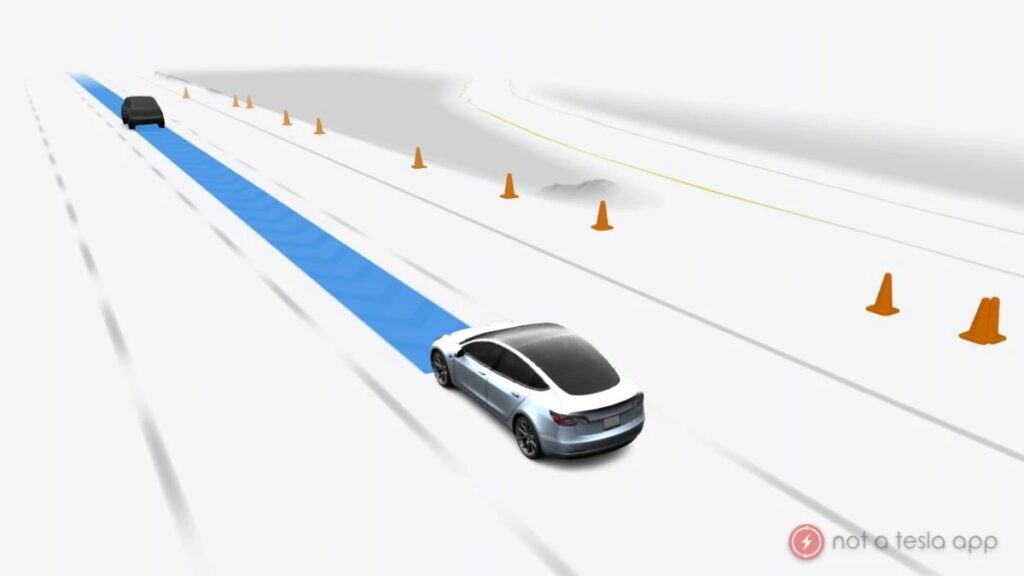
The system will warn the driver sooner when it detects possible inattention. If the driver is not paying attention while the vehicle is performing a maneuver, they may also receive a full strike linked to use of the system.
RDW also refers to additional safeguards against misuse. The aim is to reinforce that Tesla Assisted Driving remains supervised: the driver must follow what is happening and remain ready to intervene.
Contextual speed management also changes
When Contextual Max Speed is active, the maximum-speed indicator will communicate the system’s choices more clearly. If the system prevents a speed reduction, the indicator will pulse. Setting a higher maximum speed than the one suggested will require confirmation by scrolling upward on the steering-wheel control.
If the vehicle then travels above the displayed limit, the ISA sign will pulse red and the selected maximum speed will appear next to the vehicle speed. The reason for the difference should therefore be immediately visible on the display.
RDW testing and the European process
RDW tested the changes both on a proving ground and on public roads. The authority says it found no adverse or unintended effects on system operation or vehicle behavior.
The update extends the assessment completed in previous weeks. In our earlier analysis of the RDW-approved changes, we covered the Tesla Assisted Driving name, the 10% speed-offset cap and the reset to 0% at each startup. The newly approved measures add another layer of attention and maneuver monitoring.
The countries that adopted the Dutch approval have been informed, but the process for the entire European Union remains with the Technical Committee – Motor Vehicles. Its discussions are confidential, and this approval alone does not provide an activation date for Italy or the rest of the EU.
When will it reach vehicles?
RDW confirms that the update will be delivered through software, without naming a specific version or timetable. Tesla will decide when to make it available, so distribution may be gradual.
For European owners, the key point is that the rules continue to evolve ahead of any broader expansion. The process is not only about bringing TAD to more markets, but also about adapting its behavior to the conditions required by European authorities.
What do you think?
Does requiring hands on the wheel above 130 km/h feel like a balanced compromise? And will earlier warnings make Tesla Assisted Driving clearer and safer in everyday use? Let us know in the comments and share the article with anyone following the system’s European path.





Let’s discuss it
Experiences, questions and perspectives from the Teslhub community.
Please keep the discussion respectful. Members’ comments are moderated before publication.
Start the conversation. Leave the first comment.