
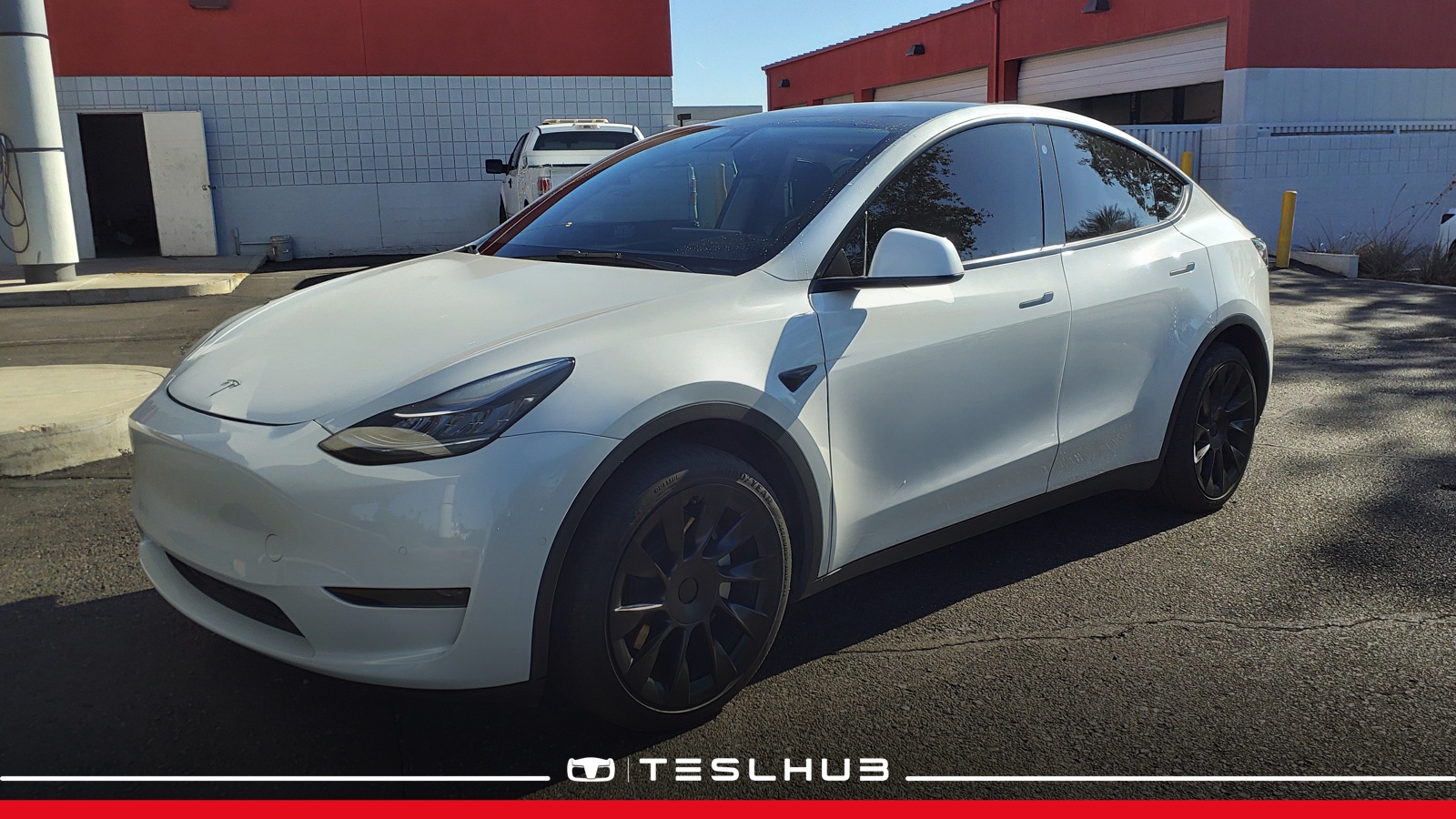
March 2020: Model Y deliveries begin. This archive article was prepared in October 2026; its editorial date is 2 April 2020, when the first quarterly report confirmed the start.
With the first Model Y deliveries in March 2020, Tesla added a compact SUV based on the Model 3 platform to its range. It was a tangible step towards a wider offering for people seeking a taller body without the Model X’s size and complexity. After the prototypes came the moment of handing cars to customers.
The debut took place in a period inseparable from that year’s industrial history. Understanding it means distinguishing three stages: the start of production, the beginning of deliveries and subsequent factory growth. These are separate milestones, even when they appear in the same headline.
Model Y: production in January, customers in March
At the end of January, Tesla had announced the start of the Model Y production ramp in Fremont. Deliveries were expected by the end of the first quarter. Confirmation came on 2 April: cars had begun reaching customers in March, ahead of the original schedule.
The factory was not yet operating at its final rate. The plan involved progressively adding machinery in its departments. In January, stated installed capacity for Model 3 and Model Y combined was 400,000 vehicles a year, with a target of 500,000 by mid-2020. These were industrial capacities and targets, not quantities of Model Y cars already built or delivered.
A report that grouped Model 3 and Model Y together
In its release of 2 April, Tesla reported 87,282 vehicles produced and around 76,200 delivered for Model 3 and Model Y combined in the first quarter. The published breakdown did not identify Model Y numbers separately. Attributing the entire group to the new SUV would completely change the meaning of the figures.
The counting method also matters: a delivery was recorded once the car had been transferred to the customer and all paperwork was correct. The release gave preliminary figures subject to possible changes. The central news remained the model’s commercial launch, while the specific volume for its initial phase was not disclosed separately.
A new body style on a familiar platform
The relationship with Model 3 was part of the project’s approach. Model Y brought that platform into the compact SUV category, a different route from creating a second Model X. This connection helps frame the launch as an expansion of the range as well as a new production programme.
The industrial journey would continue beyond Fremont. In its 2020 report, Tesla also listed Model Y production in Shanghai. This later development helps explain the project’s growth; it does not mean the first March 2020 deliveries began simultaneously from every factory or in every market. The launch should therefore not be presented as immediate availability in Italy.
Read today, that start shows how much the journey from announcement to repeatable production matters. The SUV had reached customers, but a wider range still required capacity, logistics and different timelines for each market. It is through that less visible work that a new model begins to change a manufacturer’s position.
Sources and image
- Tesla’s Q4 2019 update of 29 January 2020.
- Tesla’s Q1 2020 production and deliveries, 2 April 2020.
- Tesla’s 2020 annual report, for the subsequent production context.
Cover: HJUdall / Wikimedia Commons, CC0. Archive photograph taken on 21 December 2022 of a 2021 Model Y Long Range: a first-generation car, not one of the first delivered vehicles or a record of the 2020 event. Cropped and overlaid with the original Teslhub PNG.


Let’s discuss it
Experiences, questions and perspectives from the Teslhub community.
Please keep the discussion respectful. Members’ comments are moderated before publication.
Start the conversation. Leave the first comment.