
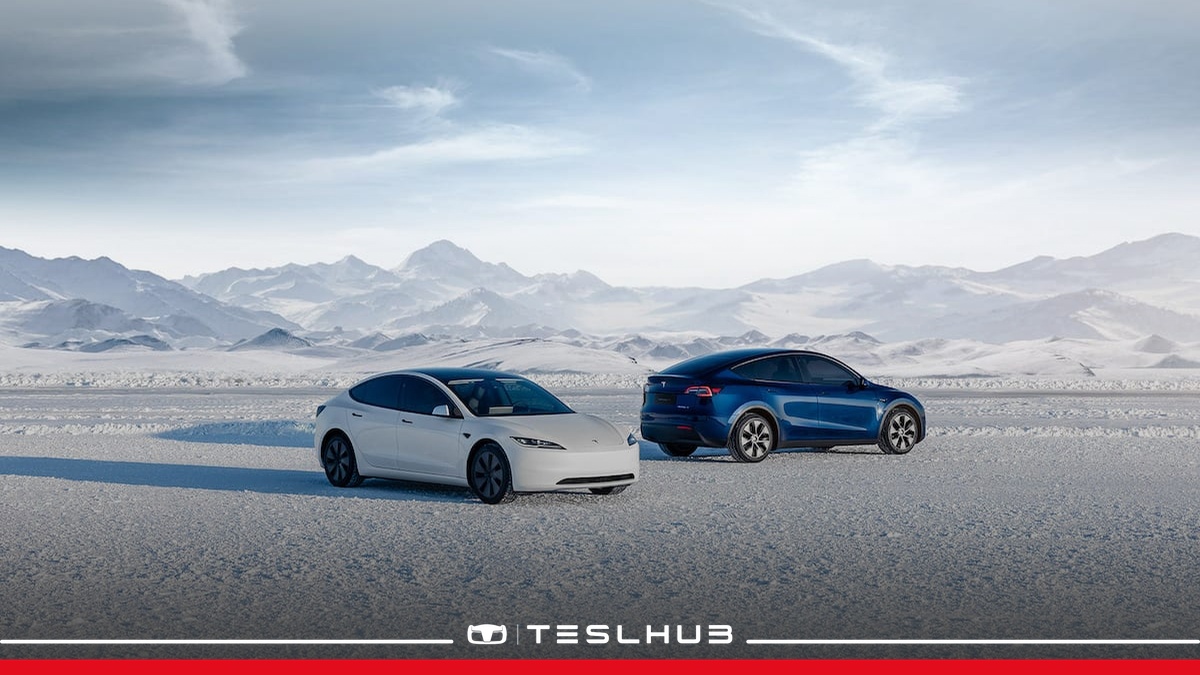
Using a Tesla in winter means preparing for two different moments: departure and your next charging stop. Warming the car before leaving and setting a destination in navigation serve different purposes. This winter guide brings together steps verified against Tesla’s Italian documentation, without promising the same range or charging times for everyone.
Verified on 22 October 2026. Based on the Model 3 and Model Y covered by the current manuals. For older vehicles, equipment and control names, check your car’s manual on the touchscreen: a feature appearing on another model does not guarantee that it is available on yours.
Tesla in winter: preparing to leave
For regular departures, open Controls > Schedule, choose the location and set preconditioning for the required time and days. In the Tesla app, scheduling is under Schedule. Check the selected location: do not confuse a home schedule with one for a different address.
For an occasional departure, the Model Y manual points to Climate in the app: as well as heating the cabin, the battery is warmed when necessary. Tesla suggests allowing 30–45 minutes in cold conditions. This is not a guaranteed countdown, because starting conditions vary.
Schedule charging to finish near departure
You can also create a charging schedule in the Schedule section. In low temperatures, Tesla recommends finishing the session close to departure. When the car is plugged in, preconditioning can use external power. However, a low-powered domestic socket and severe cold can limit the energy available: plugging in and heating do not ensure that the battery percentage will rise in every situation.
Prepare the battery for a Supercharger stop
The Model 3 manual distinguishes departure preparation from preparation for fast charging: use Trip Planner to navigate to the Tesla charging location. The vehicle can then preheat the battery as you approach. Tesla suggests allowing 30–45 minutes before arrival; for a shorter journey, it advises preconditioning before you set off.
Do not interpret this guidance as a promise of power at the connector. The suggested time helps you plan the journey; it does not replace the information the car displays about the actual charging session.
Ice: defrost first, then open
On Model Y, Climate > Defrost Car in the app helps with frost and ice. The manual warns against using tools or excessive force on frozen handles. Handle procedures differ between models and versions: avoid applying a sequence intended for another car to a Model 3.
There are also regional differences relating to the charge port: the Model Y manual limits a specific heating option to certain markets. We therefore do not present it as a control universally available in Italy.
A quick check before setting off
- Confirm the location, days and time in the schedule.
- Check in the vehicle that preparation is actually active.
- If you plan a charging stop, set a route to the Supercharger.
- Consult your specific manual before handling frozen components.
Tesla in winter: comfort and charging are different
A warm cabin does not mean the battery has already reached the ideal temperature for every use. Charging speed also depends on several factors: temperature, state of charge, available power and vehicle condition. It is therefore useful to prepare for departure and use navigation when heading to a Supercharger, without assuming one universal preparation time.
If your vehicle’s controls differ from those described, check the manual for your model and its installed software version. Do not force frozen components or replace the vehicle’s displayed instructions with a generic procedure.

Official sources: Tesla’s winter driving tips; Model Y Owner’s Manual; Model 3 Owner’s Manual.
Find more practical articles in Guides and Tutorials. To follow Teslhub and talk with the community, visit our channels.
The Teslhub team



Let’s discuss it
Experiences, questions and perspectives from the Teslhub community.
Please keep the discussion respectful. Members’ comments are moderated before publication.
Start the conversation. Leave the first comment.