

Tesla’s Full Self-Driving software was advancing with v13 when this article was published in April 2025. The available capabilities nevertheless differed by hardware generation: HW4 vehicles were receiving the newer software, while HW3 cars remained on v12.6. This comparison describes that period’s rollout, not today’s software availability. Customer FSD remained a supervised driver-assistance system.
What changed with FSD v13?
The reported technical differences concerned the size and complexity of the neural networks. The software analysis discussed in the original article described v13 as faster in its decisions and more natural in its driving behaviour. It cited an increase in the component labelled node B, associated with end-to-end driving, from roughly 2.3 GB to 7.5 GB. Those figures were attributed to third-party software analysis in the original report and have not been independently verified here. They are not official Tesla performance specifications or independent proof of safety.
The component labelled node A, associated with other perception functions, was reported as largely unchanged. The contrast suggested that Tesla was expanding particular parts of the system around the capabilities of HW4, while HW3 imposed tighter computing constraints.
Uncertainty for HW3 owners
The original article referred to Tesla’s statements around its end-of-2024 financial results concerning hardware upgrades for owners who had purchased FSD. The possibility of replacing the HW3 computer was relevant if the hardware could not deliver the intended capabilities. That discussion was not a completed retrofit programme, and the article did not establish an installation date, universal eligibility or a confirmed upgrade specification.
Meanwhile, engineers were adapting software to the older platform. Analysis attributed to GreenTheOnly indicated that some networks were shared between HW3 and HW4, while others were tailored to HW3’s limitations. The article described v12.6 as drawing on a reduced set of v13-related networks. This was third-party technical analysis, not a promise that both platforms would gain identical functionality.
HW4 at the time, AI5 on the horizon
HW4 was the platform supporting Tesla’s most advanced customer FSD software at publication. The original article also discussed the next-generation AI5 computer and speculation that it might arrive as early as late 2025 and support the future Robotaxi programme. That timing was an expectation in the archived report, not confirmation of a delivered product.
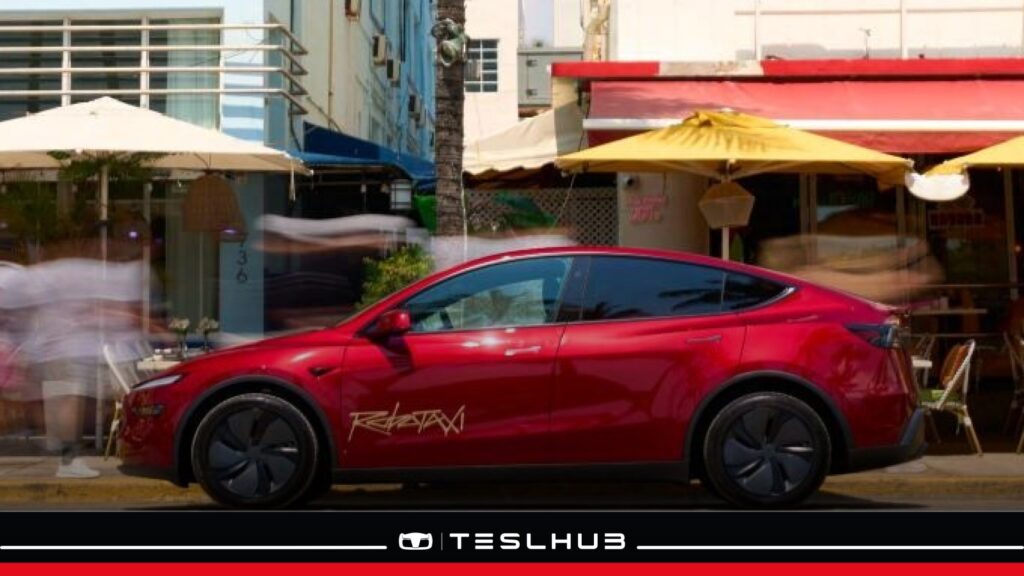
Tesla was then targeting an Austin, Texas launch of an unsupervised Robotaxi service from June 2025. A proposed service rollout must be distinguished from customer FSD: it did not remove the supervision requirement from privately owned cars or establish general availability in other markets.
What the hardware gap meant
The gap between HW3 and HW4 had become more visible as v13 expanded software capabilities. At the same time, the comparison highlighted how software ambitions depend on computing resources and on the conditions under which a system is deployed.
Continued work on smaller networks offered a path to further improvements on older hardware. It did not, by itself, establish that HW3 could deliver unsupervised driving or guarantee what HW4 and AI5 would eventually achieve. Those questions required separate evidence beyond the software differences described here.
💶 REFERRAL PROGRAM 🚘
Explore the referral benefits available when buying a new Tesla.
Use the following referral link and follow Tesla’s normal ordering process. Check the current terms and available benefits before ordering; you can copy the link into your browser if needed.
https://www.Teslhub.com/Sconto
👏 That completes the referral step.
You can also find our referral link in the “Buy a Tesla” section of our biography and in the website menu.
🌐 STAY UP TO DATE 📢
Follow our channels to keep up with the latest news.
Join Teslhub Members, our Telegram community, to talk, ask questions and share Tesla experiences with us and other members. You can also find us on WhatsApp!
We hope you enjoyed the article. See you in the next one, or on our social channels.
See you soon!
Giorgio Rebecchi
Editor


Let’s discuss it
Experiences, questions and perspectives from the Teslhub community.
Please keep the discussion respectful. Members’ comments are moderated before publication.
Start the conversation. Leave the first comment.